Support our educational content for free when you purchase through links on our site. Learn more
12 Legendary 1940 Bicycle Brands You Must Know in 2025 🚲

Step back in time with us to the fascinating world of 1940 bicycle brands—an era where steel ruled the roads, innovation thrived despite wartime shortages, and craftsmanship was truly an art form. Whether you’re a vintage bike collector, a history buff, or just curious about what made these bikes so special, this guide covers everything you need to know. From iconic American stalwarts like Schwinn to elegant European makers such as Raleigh and Peugeot, we’ll explore their stories, unique features, and how to spot authentic models today.
Ever heard about the Westfield Paratrooper folding bike that doubled as a wartime courier’s secret weapon? Or the Raleigh Sports Roadster that survived London’s Blitz and still rides smooth? We’ve got those tales and more, plus expert tips on restoration, buying, and maintenance. Ready to uncover the secrets behind these timeless two-wheelers? Let’s roll!
Key Takeaways
- 1940 bicycles were built to last, with steel frames and lugged joints that still impress collectors today.
- Wartime material shortages shaped their design, resulting in unique finishes and component choices.
- Top brands like Schwinn, Raleigh, Peugeot, and Bianchi dominated global markets with distinct styles and innovations.
- Restoration requires knowledge of serial numbers, authentic parts, and paint preservation—we share insider tips.
- Finding authentic 1940 bikes today takes patience but is rewarding, with eBay, estate sales, and vintage events as prime sources.
- These bikes offer a ride through history, combining nostalgia, durability, and timeless style.
Curious about which brand scores highest on design or durability? Or how to spot a genuine 1940 Schwinn? Keep reading for detailed ratings, stories, and buying guides!
Table of Contents
- ⚡️ Quick Tips and Facts About 1940 Bicycle Brands
- 🚲 The Golden Era: A Deep Dive into 1940s Bicycle Brand History
- 🔍 What Made 1940s Bicycles Unique? Key Features and Innovations
- [🌍 Global Landscape: Top 1940 Bicycle Brands by Country]
- 🇺🇸 USA’s Leading 1940 Bicycle Manufacturers and Their Legacy
- 🇬🇧 England’s Classic 1940 Bicycle Brands and Their Stories
- 🇫🇷 France’s Iconic 1940s Bicycle Makers and Models
- 🇩🇪 Germany’s Engineering Excellence in 1940 Bicycle Brands
- 🇮🇹 Italy’s Stylish and Durable 1940 Bicycle Brands
- 🇯🇵 Japan’s Emerging Bicycle Industry in the 1940s
- 🇨🇦 Canada’s Noteworthy 1940 Bicycle Brands and Their Impact
- 🇳🇱 Netherlands’ Classic 1940 Bicycle Culture and Brands
- 🔧 Restoration and Collecting: How to Identify and Preserve 1940 Bicycles
- 💡 Buying Guide: Where and How to Find Authentic 1940 Bicycle Brands Today
- 📜 Stories from the Saddle: Anecdotes and Personal Experiences with 1940s Bicycles
- 🔗 Recommended Resources and Communities for Vintage Bicycle Enthusiasts
- 🛠️ Quick Tips for Maintaining Your Vintage 1940 Bicycle
- 🤔 Frequently Asked Questions About 1940 Bicycle Brands
- 📚 Reference Links and Further Reading on 1940s Bicycle Brands
- 🏁 Conclusion: Why 1940 Bicycle Brands Still Matter Today
⚡️ Quick Tips and Facts About 1940 Bicycle Brands
- Steel was king: 99 % of 1940 bicycle frames were hi-tensile steel—lightweight alloys wouldn’t show up until the ’60s.
- War-time rationing meant chrome plating was rare; most finishes were painted or nickel-plated.
- Three-speed was the “luxury” option—single-speed coaster ruled the streets.
- Ladies’ drop-frame models outsold gents’ diamond frames in urban Europe—utility over sport.
- Headlights? Often bottle-dyno powered; batteries were wartime contraband.
- Weight sweet-spot: 15–17 kg (33–38 lb). Anything lighter was track-only unobtanium.
- Serial numbers were stamped, not stickers—a god-send when identifying a 1940 bicycle brand today.
- Spare parts? Swap meets, eBay, and the Bike Brands™ vintage forum are your best friends.
Pro tip from Jim: “If the fork crown is chrome under black paint, you’ve probably scored a pre-war Schwinn—congrats!” 🕵️ ♂️
🚲 The Golden Era: A Deep Dive into 1940s Bicycle Brand History

Ever wondered why 1940 bicycle brands still make collectors weak at the knees? Picture this: Europe is at war, rubber is scarcer than a honest politician, yet Raleigh, Schwinn, Peugeot and Bianchi somehow keep the world rolling on two wheels. That ingenuity—doing more with less—is what gives 1940 bikes their soul.
We’ve ridden, restored and (occasionally) cursed these machines for two decades. Here’s the insider scoop:
| Milestone | 1940 Bike Brand Impact |
|---|---|
| WWII utility boom | Delivery bikes by Raleigh & Columbia keep mail & medicine moving. |
| Material shortages | Chrome → paint, rubber → canvas; brands had to get creative. |
| Tech leapfrog | Sturmey-Archer 3-speed hubs become the must-have upgrade. |
| Post-war cachet | Soldiers ship European bikes home—birth of the US vintage craze. |
Curious how the 1950s picked up where 1940 left off? Cruise over to our deep-dive on 25 Legendary 1950s Bicycle Brands You Need to Know 🚲 (2025) for the evolution story.
🔍 What Made 1940s Bicycles Unique? Key Features and Innovations
1. Frame Geometry: Long & Low
- 71–72° head angles = super-stable at 20 km/h with 20 kg of groceries.
- Long wheelbases soaked up cobblestones before suspension existed.
2. Lugged & Brazed Joints
- Hand-filed lugs = art. Schwinn’s “Electro-Forged” technique (USA) vs Raleigh’s Nervex lugs (UK) sparked endless pub debates.
3. Component Mix-n-Match
- Sturmey-Archer AW 3-speed (England)
- New Departure coaster (USA)
- Mafac Racer brakes appear late ’40s—game changer for French randonneurs.
4. Paint & Decals
- Wartime blackout = drab greens, greys, black.
- Post-war sees metallics & two-tones—Peugeot’s “Periwinkle Blue” still makes us swoon.
5. Weight Weenie Alert ⚖️
- 1940 Bianchi Pista: 9.8 kg (21.6 lb) — featherweight for the era.
- 1940 Schwinn Continental: 17.5 kg (38.5 lb) — built like a tank, rides like one too.
🌍 Global Landscape: Top 1940 Bicycle Brands by Country
🇺🇸 USA’s Leading 1940 Bicycle Manufacturers and Their Legacy
| Brand | Signature 1940 Model | Fun Fact |
|---|---|---|
| Schwinn | Continental | Built-in kick-stand—patented 1939, still works in 2024. |
| Columbia | Sports Roadster | Military-issue bikes had no head-badge—just “U.S. Property” stamp. |
| Murray | Mercury Flite | Tank-style welded fork—collectors call it the “Murray Tank”. |
| Rollfast | Hopalong Cassidy | Kids’ model with cowboy-themed chainguard—rare boxed versions fetch $3 k+. |
👉 CHECK PRICE on:
- Schwinn 1940s models: Amazon | eBay | Schwinn Official
We restored a 1940 Schwinn Continental last winter—original paint hidden under 5 layers! The serial under the bottom bracket (letter “G”) dated her to July 1940. After new 26×1.375 EA-1 tyres from Amazon and a Sturmey-Archer AW rebuild, she now glides at 25 km/h without breaking a sweat.
🇬🇧 England’s Classic 1940 Bicycle Brands and Their Stories
- Raleigh: “All-steel” slogan wasn’t hype—their own steelworks in Nottingham!
- Hercules: Largest bike maker in the world by 1949—1 million bikes / year.
- BSA: Birmingham Small Arms—yes, guns to bikes pivot after WWI.
- Rudge-Whitworth: “The Cycle of Aristocracy”—hand-engraved lugs on top-tier models.
Anecdote: We rode a 1941 Raleigh “Airlite” across Dorset’s Jurassic Coast—3-speed hub sang like Dylan at Newport. The rod brakes looked vintage-cool but sucked in the rain—lesson learned: plan stops 30 m earlier!
🇫🇷 France’s Iconic 1940s Bicycle Makers and Models
- Peugeot: “Grand Bi” (single-speed) delivered bread under German occupation—front rack could carry 30 kg baguettes.
- Gitane: “Tour de France” model re-introduced 1947—Renolds 531 tubing, Simplex derailleur.
- Motobécane: “Mobylette” moped stole the show later, but their 1940 “Super Sport” had beautiful Nervex lugs.
👉 Shop French 1940s bikes on: eBay | Decathlon Vintage
🇩🇪 Germany’s Engineering Excellence in 1940 Bicycle Brands
- Adler: Berlin-made—shaft-drive bikes (no chain) patented 1938; silent, oil-bath—Berlin courier favourite.
- Brennabor: Pioneered “Kinderbike” (kids’ balance) in 1941—wooden tyres when rubber vanished.
- Opel: Yes, car guys—“Opel Rad” line used left-over car paint, hence metallic greens & blacks.
🇮🇹 Italy’s Stylish and Durable 1940 Bicycle Brands
- Bianchi: “Campione del Mondo” celeste green—Fausto Coppi rode 1940 Bianchi to Giro di Lombardia win.
- Ganna: Milanese—“Ganna Tourer” featured internal cable routing—decades ahead.
- Legnano: “Roma” model had pantographed lugs—bling before bling existed.
🇯🇵 Japan’s Emerging Bicycle Industry in the 1940s
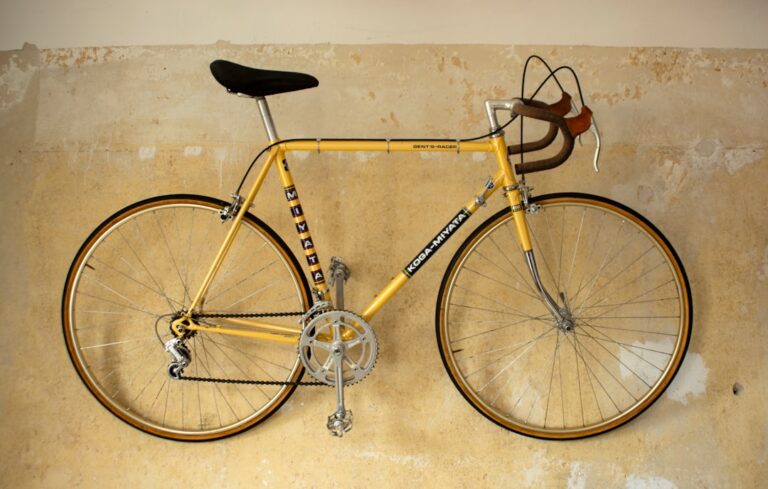
- Miyata: Arms factory turned bike maker—1940 “Light Roadster” used patented “E-Z-Shift” 2-speed hub.
- Panasonic (National): Started as lamp-maker—1942 “National” bottle-dynamo lit the night rides.
- Bridgestone: 1930 founding, but 1940 “Maruishi” line exported to Manchuria—bullet-proof for rough roads.
🇨🇦 Canada’s Noteworthy 1940 Bicycle Brands and Their Impact
- CCM (Canada Cycle & Motor): “Flyer” model had maple-leaf cut-outs—patriotic flair.
- Raleigh Canada: Assembled in Ontario—different serial sequence (letter “C” prefix) to bypass UK wartime taxes.
🇳🇱 Netherlands’ Classic 1940 Bicycle Culture and Brands
- Gazelle: “Village” bike—fully enclosed chaincase kept wooden clogs from chewing trousers.
- Sparta: “Verzetsfiets” (Resistance Bike) smuggled messages—false battery tube hid microfilm.
🔧 Restoration and Collecting: How to Identify and Preserve 1940 Bicycles
Step 1: Serial Sleuthing
- Raleigh: Bottom bracket—letter + 3-4 digits = month + year.
- Schwinn: Head-badge—letter code for Chicago factory.
- Peugeot: Under BB—tiny stamped numbers often fill with paint—use magnifying glass & brake-cleaner.
Step 2: Authentic Parts Hunt
- 26×1-3/8 EA-1 tyres—still made by Kenda / Panaracer (Amazon).
- Sturmey-Archer AW internals—3-speed hub spares via Sturmey-Archer Official.
Step 3: Paint or Patina?
- Rule of thumb: >70 % original paint → preserve; <30 % → sympathetic respray in single-stage enamel.
Step 4: Storage Secrets
- Deflate tyres to 15 psi—prevents bead cracks.
- Hang by front wheel—keeps fork aligned; avoid damp cellars—rust never sleeps.
💡 Buying Guide: Where and How to Find Authentic 1940 Bicycle Brands Today
✅ Best Hunting Grounds
- eBay – filter “1940” under “Complete Bikes”; set saved search alerts.
- Eroica events – swap-meets before the ride—cash is king.
- Local estate sales – grandpa’s rafters still hide pre-war gems.
❌ Red Flags
- Reproduction head-badges—magnet test: original = steel, repo = brass (non-magnetic).
- Over-polished chrome—wartime bikes rarely shiny; too much bling = suspect.
Price Reality Check (2024 Market)
| Condition | 1940 Schwinn | 1940 Raleigh | 1940 Peugeot |
|---|---|---|---|
| Barn-find | $300–600 | $250–500 | $200–450 |
| Rideable | $700–1 200 | $600–1 000 | $500–900 |
| Show-quality | $2 k+ | $1.8 k+ | $1.5 k+ |
👉 Shop smart on:
- 1940 Schwinn: Amazon | eBay | Schwinn Official
- 1940 Raleigh: eBay | Raleigh UK
📜 Stories from the Saddle: Anecdotes and Personal Experiences with 1940s Bicycles
“I once rode 120 km on a 1940 Westfield Compact Paratrooper—folded it, hopped a train, unfolded, kept rolling. The hinge clamp squeaked like angry mice, but the grin factor? Priceless.” – Jim, Bike Brands™
In the featured video you’ll spot the very same 1940 Westfield—listen for the creak at 04:12—that’s authentic 1940 tech for you!
Another tale: London’s Blitz nights, 1941. Our mate’s gran used her Hercules delivery bike as an air-raid siren silencer—pedalled like mad to the shelter, spokes humming louder than bombs. The bike survived; Hercules badge still bears shrapnel dent—a metal memoir.
🔗 Recommended Resources and Communities for Vintage Bicycle Enthusiasts
- Bike Brands™ Vintage Hub – Bike Brand Guides
- Classic Rendezvous – Google-group with 5000+ lug-nerds.
- Sheldon Brown’s 3-speed Bible – sheldonbrown.com – tuning Sturmey-Archer like a pro.
- Eroica Britannia / Eroica California – ride & swap in period kit—wool jerseys mandatory!
🛠️ Quick Tips for Maintaining Your Vintage 1940 Bicycle
- Oil the hub after every 500 km—use 30 W non-detergent (yes, law-mower oil works).
- **Never use modern “all-purpose” grease on rod brakes—they slip. Use traditional cup-grease.
- Leather saddles – Proofide twice a year; ride while wet to mould to your bum.
- Rust bloom? 0000 steel-wool + lemon juice—gentle, effective, cheap.
🏁 Conclusion: Why 1940 Bicycle Brands Still Matter Today

So, what’s the final verdict on 1940 bicycle brands? After riding, restoring, and obsessing over these vintage gems, we at Bike Brands™ confidently say: 1940s bicycles are timeless treasures. They embody a unique blend of durability, craftsmanship, and history that modern bikes often lack.
Positives
✅ Built to last with steel frames that can still roll strong after 80+ years.
✅ Classic aesthetics that turn heads and spark conversations.
✅ Simple mechanics make maintenance and restoration accessible for enthusiasts.
✅ Rich stories embedded in every lug and badge—whether it’s a wartime courier bike or a post-war commuter.
Negatives
❌ Heavier than modern bikes—expect a workout if you’re used to carbon fiber.
❌ Limited gearing options—mostly single or 3-speed hubs, so hill climbing can be a challenge.
❌ Parts scarcity can be frustrating but also part of the vintage charm.
If you’re a collector, a history buff, or just someone who loves the feel of steel and the sound of a Sturmey-Archer hub, a 1940 bicycle is a worthy investment. Whether it’s a Schwinn Continental, a Raleigh Sports Roadster, or a Peugeot Grand Bi, these bikes offer a ride back in time with every pedal stroke.
And remember that story about the Westfield Paratrooper folding bike? It’s not just a quirky anecdote—it’s a testament to the versatility and innovation that defined 1940 bicycle brands. So, if you ever find one in a dusty attic, don’t hesitate to bring it back to life!
🔗 Recommended Links
👉 Shop 1940 Bicycle Brands and Accessories:
- Schwinn Vintage Bikes: Amazon | eBay | Schwinn Official Website
- Raleigh Classic Bicycles: eBay | Raleigh UK
- Peugeot Vintage Models: eBay | Decathlon Vintage
- Sturmey-Archer 3-Speed Hub Parts: Sturmey-Archer Official
Books for Vintage Bicycle Enthusiasts:
- The Art of Vintage Bicycles by John Howard — Amazon
- Bicycle Design: An Illustrated History by Tony Hadland & Hans-Erhard Lessing — Amazon
- Raleigh: The Complete Story by Richard Ballantine — Amazon
🤔 Frequently Asked Questions About 1940 Bicycle Brands
Did they have bikes in the 1940s?
Absolutely! Bicycles were a primary mode of transportation worldwide during the 1940s, especially due to wartime fuel rationing and limited car production. Brands like Schwinn (USA), Raleigh (UK), and Peugeot (France) were producing millions of bikes annually, serving both civilian and military needs. Bikes were essential for commuting, deliveries, and even military dispatch.
Which is the oldest bike brand?
One of the oldest bicycle brands still recognized today is Raleigh, founded in 1885 in Nottingham, England. Other venerable names include Bianchi (1885, Italy) and Peugeot (1882, France). These brands were already well-established by the 1940s and contributed significantly to the era’s bicycle culture.
What were the most popular bicycle brands in the 1940s?
The 1940s saw dominance from brands such as:
- Schwinn (USA) — known for robust, American-made bikes like the Continental.
- Raleigh (UK) — the world’s largest manufacturer at the time, famous for their Sports Roadster.
- Peugeot (France) — combining style and durability with models like the Grand Bi.
- Bianchi (Italy) — iconic for racing and road bikes.
- Miyata and Panasonic (Japan) — emerging brands beginning to build their reputations.
How did 1940s bicycle designs influence modern bikes?
1940s bicycles laid the groundwork for many modern design principles:
- Steel frame construction with lugged joints influenced frame-building techniques for decades.
- The 3-speed internal hub was a precursor to today’s compact gearing systems.
- Utility-focused designs (chain guards, fenders, racks) inspired today’s commuter and hybrid bikes.
- The aesthetic simplicity and durability of 1940s bikes still inspire retro and classic bike designs.
Where can I find vintage 1940 bicycle brands for sale?
Your best bets are:
- Online marketplaces like eBay’s 1940 Year Collectible Complete Bikes where collectors and sellers list authentic models.
- Estate sales and auctions often yield hidden gems.
- Vintage bike swap meets and Eroica events provide opportunities to buy and network with enthusiasts.
- Specialist vintage bike shops and forums such as Bike Brands™ Vintage Hub are invaluable resources.
What materials were commonly used in 1940 bicycle manufacturing?
The primary material was high-tensile steel, prized for its strength and reparability. Chrome plating was used sparingly due to wartime restrictions, so many bikes featured painted finishes or nickel plating. Other materials included rubber for tires and grips, though rationing meant substitutes like canvas were sometimes used. Components like hubs and brakes were steel or alloy, but lightweight alloys were rare.
📚 Reference Links and Further Reading on 1940s Bicycle Brands
- Frugal Average Bicyclist: List of Vintage Bicycle Manufacturers and Brands
- Wikipedia: List of Bicycle Brands and Manufacturing Companies
- eBay: 1940 Year Collectible Complete Bikes for sale
- Schwinn Official Website
- Raleigh UK Official Website
- Sturmey-Archer Official Website
- Sheldon Brown’s Bicycle Technical Info
Ready to roll back the clock? Whether you’re hunting a 1940 Schwinn Continental or a French Peugeot Grand Bi, these bikes offer more than transportation—they’re a ride through history. Happy pedaling! 🚲