Support our educational content for free when you purchase through links on our site. Learn more
Top 22 Vintage Bicycle Brands of the 1970s You Must Know 🚲 (2025)

Step back in time with us to the golden era of cycling—the 1970s—a decade that ignited the worldwide bike boom and birthed some of the most iconic and enduring bicycle brands ever made. Whether you’re a seasoned collector, a restoration enthusiast, or simply curious about what made those classic steel frames so special, this comprehensive list will take you on a whirlwind tour through the top 22 vintage bicycle brands of the 1970s.
Did you know that during the 1970s, the demand for adult bicycles in North America skyrocketed by over 50%, fueled by the oil crisis and a surge in fitness culture? This explosion brought European craftsmanship and Japanese innovation to the forefront, creating a diverse landscape of bikes that still captivate riders today. Later in this article, we’ll reveal hidden gems beyond the household names, share expert tips on identifying authentic 70s classics, and even dive into restoration secrets from our own Bike Brands™ team. Ready to discover which brands defined a decade and why their legacy still rides strong? Let’s roll!
Key Takeaways
- The 1970s marked a pivotal era in cycling history, with brands like Raleigh, Peugeot, Schwinn, and Bianchi leading the charge.
- Steel frames with Reynolds 531 and Columbus tubing defined the ride quality and durability of these vintage bikes.
- Japanese brands such as Fuji and Miyata introduced precision engineering and competitive pricing, shaking up the market.
- Identifying authentic 70s bikes involves examining frame materials, components, and decals—we provide detailed guidance.
- Restoring a vintage bike is a rewarding journey that combines detective work with hands-on craftsmanship.
- Vintage bikes offer a unique riding experience that blends nostalgia, style, and mechanical simplicity.
- Beyond the big names, lesser-known brands like Italvega and Centurion offer hidden value and quality.
Curious about where to find these classic beauties or how to bring one back to life? Keep reading for our expert insights and personal stories from the Bike Brands™ crew!
Table of Contents
- ⚡️ Quick Tips and Facts: Your 1970s Vintage Bike Cheat Sheet
- 🕰️ The Golden Era: Unearthing 1970s Bicycle History & Heritage
- ✨ Why the 1970s? The Enduring Appeal of Vintage Road Bikes
- 🔍 Identifying a True 1970s Classic: What to Look For
- 🏆 Our Top 20+ Iconic Vintage Bicycle Brands from the 1970s
- 1. Raleigh: The British Titan 🇬🇧
- 2. Peugeot: French Elegance on Two Wheels 🇫🇷
- 3. Schwinn: America’s Cycling Powerhouse 🇺🇸
- 4. Motobécane: The French Innovator 🇫🇷
- 5. Bianchi: Italian Passion & Performance 🇮🇹
- 6. Gitane: Another French Gem 🇫🇷
- 7. Mercier: The Understated French Racer 🇫🇷
- 8. Fuji: Japanese Precision & Craftsmanship 🇯🇵
- 9. Panasonic: Beyond Electronics, Into Cycling 🇯🇵
- 10. Miyata: Japanese Engineering Excellence 🇯🇵
- 11. Dawes: British Touring Stalwart 🇬🇧
- 12. Holdsworth: Classic British Racing Heritage 🇬🇧
- 13. Gazelle: Dutch Durability & Style 🇳🇱
- 14. Ross: American Value & Accessibility 🇺🇸
- 15. Columbia: America’s Oldest Bicycle Manufacturer 🇺🇸
- 16. Huffy: The Everyday American Ride 🇺🇸
- 17. Sekine: Canadian-Japanese Fusion 🇨🇦🇯🇵
- 18. Apollo: Australian & Canadian Market Presence 🇦🇺🇨🇦
- 19. Olmo: Italian Racing Pedigree 🇮🇹
- 20. Masi: Legendary Italian Craftsmanship 🇮🇹
- 21. Cinelli: The Art of Italian Cycling 🇮🇹
- 22. Gios: Blue Blood Italian Racers 🇮🇹
- 💎 Beyond the Big Names: Lesser-Known 1970s Gems Worth Discovering
- ⚙️ Components of the Era: Drivetrains, Brakes, and Framesets That Defined the 70s
- ❤️ 🩹 Restoring Your 1970s Vintage Bicycle: A Labor of Love & Learning
- 🤔 Riding a 70s Classic Today: Pros and Cons of Vintage Cycling
- 💰 The Collectibility Factor: Investing in Vintage Bikes & Their Value
- 🥳 Vintage Bike Events & Communities: Connect with Fellow Enthusiasts
- 🚴 ♀️💨 Our Personal Anecdotes: Tales from the Saddle of a 70s Steed
- ✨ Conclusion: The Enduring Legacy of 1970s Bicycles
- 🔗 Recommended Links: Your Vintage Cycling Resource Hub
- 📚 Reference Links: Our Sources & Further Reading
Here is the main body of the article, written from the expert perspective of the “Bike Brands™” team.
⚡️ Quick Tips and Facts: Your 1970s Vintage Bike Cheat Sheet
Alright, let’s get you up to speed before we dive deep. If you’re eyeing a groovy 1970s bicycle, or just want to sound like you know your stuff, here’s the lowdown. Think of this as your backstage pass to the world of vintage steel!
| Quick Fact 💡 | The Nitty-Gritty Details |
|---|---|
| The “Bike Boom” | The 1970s saw an explosion in adult cycling in North America, largely thanks to the oil crisis and a growing interest in fitness. This means there are tons of 70s bikes out there waiting to be discovered! |
| Steel is Real | Forget carbon fiber and aluminum for a moment. The 1970s were dominated by high-quality steel frames from manufacturers like Reynolds (especially their 531 tubing) and Columbus. These frames are known for their smooth, comfortable ride. |
| Friction Shifting | Get ready for a more… tactile experience. Most bikes from this era used downtube friction shifters. There’s no “click” to tell you you’re in gear; it’s all about feel. It’s a skill, but oh-so-satisfying once you master it. |
| Component Kings | The big names in components were Campagnolo (the Italian dream), Shimano and SunTour (the Japanese powerhouses), and Simplex (the French classic). Seeing these names on a bike is often a sign of quality. |
| Common Tire Size | The standard for road bikes was 27-inch wheels, not the 700c size common today. Keep this in mind when hunting for replacement tires! |
| Badge Engineering | As Wikipedia notes, “Many bicycle brands do not manufacture their own product, but rather import and re-brand bikes manufactured by others.” This was super common, so you might find a bike with a certain brand name that was actually built in a Japanese factory and sold under various names globally. |
🕰️ The Golden Era: Unearthing 1970s Bicycle History & Heritage

Ah, the 1970s. A decade of bell-bottoms, disco, and… the bicycle! Seriously. For us cycling nuts, the 70s wasn’t just a decade; it was a revolution on two wheels. It was the “Bike Boom,” a period when adult cycling went from a niche hobby to a full-blown cultural phenomenon, especially in the United States.
So, what sparked this fire? A perfect storm, really. The 1973 oil crisis made people rethink their reliance on gas-guzzling cars. At the same time, a new wave of health and environmental consciousness was sweeping the nation. The humble ten-speed bicycle became the perfect symbol of freedom, fitness, and forward-thinking. It was more than just transportation; it was a statement. This boom led to a massive influx of bikes from Europe and a burgeoning industry in Japan, creating a diverse and competitive market that we’re still reaping the benefits of today. If you’re wondering What Is the Name of Vintage Bicycles? 🚲 Top 15 Iconic Brands (2025), you’ve come to the right place to explore the decade that defined them.
✨ Why the 1970s? The Enduring Appeal of Vintage Road Bikes
You might be asking, “With all the high-tech bikes available today, why on earth would I want a 40- or 50-year-old bike?” Great question! It’s not just about nostalgia.
- The Ride Quality: There’s a certain magic to the ride of a high-quality steel frame. It’s compliant, comfortable, and feels alive underneath you. It dampens road vibrations in a way that modern, stiffer materials often can’t. It’s less of a surgical instrument and more of a dance partner.
- Durability & Simplicity: These bikes were built to last. With simple mechanics and no integrated electronics, they are incredibly easy to work on. You can fix most problems with a basic set of tools, making them perfect for the budding home mechanic.
- Timeless Aesthetics: Let’s be honest, they just look cool. The clean lines, the elegant lugs (the socket-like sleeves that join the frame tubes), the shiny chrome… it’s functional art. Riding a vintage bike is a style statement that says you appreciate craftsmanship and history.
- The Thrill of the Hunt: Finding a pristine 70s classic in a barn or at a garage sale is a feeling like no other. It’s a treasure hunt where the prize is a beautiful piece of cycling history.
🔍 Identifying a True 1970s Classic: What to Look For
So you’re at a flea market and you spot a dusty old road bike. Is it a priceless gem or a piece of junk? Here’s your field guide to spotting a genuine 70s classic.
Frame Materials & Construction: Steel is Real!
The heart of any vintage bike is its frame. In the 70s, that meant steel. But not all steel is created equal.
- ✅ Look for tubing decals: High-end frames will often have a sticker near the top of the seat tube indicating the type of steel used. Look for names like Reynolds 531, Columbus SL/SLX, or Tange Champion. These were the gold standards.
- ✅ Check for lugs: Most quality frames from this era were lugged, meaning the tubes were joined together with ornate, socket-like sleeves. While not a universal rule, the quality and finishing of the lugs can be a great indicator of craftsmanship.
- ❌ Avoid heavy, low-quality steel: If the bike feels excessively heavy and has no tubing decals, it’s likely made from lower-grade “gas pipe” steel. These were common on department store bikes and lack the lively ride quality of their premium cousins.
Component Clues: Derailleurs, Brakes, and Cranks
The parts hanging off the frame are your next biggest clue.
- Derailleurs: Look for brands like Campagnolo (Nuovo Record is the holy grail), SunTour (V-GT, Cyclone), and early Shimano (Dura-Ace, 600). These were the top performers of the day.
- Brakes: Center-pull or side-pull caliper brakes were the norm. Brands like Mafac, Weinmann, and Campagnolo are good signs. Look for “suicide levers” (extension levers that allowed braking from the top of the bars) on more entry-level models.
- Cranks: Cottered cranks (where the crank arms are held on by a threaded pin) were common on lower-end bikes. Higher-end bikes will have cotterless, square-taper cranks from brands like Campagnolo, Sugino, or Stronglight.
Decals & Badges: The Brand’s Signature
The branding itself can tell you a lot. Look for a metal head badge on the front of the head tube. The style of the decals and logos can help you pinpoint the exact year, as manufacturers often updated their branding every few years. A quick search on a site like VeloBase can often help you date a bike based on its components and decals.
🏆 Our Top 20+ Iconic Vintage Bicycle Brands from the 1970s
Okay, here’s the main event! We’ve spent countless hours in the saddle and in the workshop with these beauties. This isn’t just a list; it’s a trip down memory lane with some of the most influential names in cycling. These are the brands that defined a decade.
1. Raleigh: The British Titan 🇬🇧
You can’t talk about 70s bikes without mentioning Raleigh. They were a behemoth. From the legendary, top-tier Raleigh Professional (made with Reynolds 531 tubing) to the ubiquitous Raleigh Record, they had a bike for every budget. Their Carlton factory in Worksop, England, was churning out some of the most desirable racing bikes of the era.
- Why we love them: They are the quintessential British classic. Finding a high-end, Worksop-built Raleigh is a true joy.
- Look for: The iconic Heron head badge.
👉 Shop Raleigh on: Amazon | eBay
2. Peugeot: French Elegance on Two Wheels 🇫🇷
Oh, the French! Peugeot brought a certain je ne sais quoi to the bike boom. Their PX-10 is a legendary racing machine, but they are most famous for the millions of UO-8 and similar models that introduced Americans to lightweight 10-speeds. They often featured French-sized components, which can be a fun challenge today!
- Why we love them: They have a smooth, comfortable ride and classic French styling.
- Quirks: Watch out for French threading and sizing on bottom brackets, headsets, and stems.
👉 Shop Peugeot on: Amazon | eBay
3. Schwinn: America’s Cycling Powerhouse 🇺🇸
For many Americans, Schwinn was cycling. While famous for their heavy cruisers, the 70s saw the rise of the Schwinn Paramount, a world-class, hand-built racing frame, and the Schwinn Varsity and Continental, which were the heavy but indestructible tanks that got millions of people riding.
- Why we love them: The Paramount series represents the pinnacle of American frame building of the era. The Varsity is a nostalgic icon.
- Fun Fact: The top-of-the-line Paramounts were built in a special section of the Chicago factory by their most skilled builders.
👉 Shop Schwinn on: Amazon | Walmart | eBay
4. Motobécane: The French Innovator 🇫🇷
Another French giant, Motobécane offered fantastic value. Models like the Le Champion and Grand Record were serious contenders, often equipped with high-end components for less than their Italian rivals. They were known for their quality frames and stylish paint jobs.
- Why we love them: They offered near-pro-level performance at a more accessible point.
- Keep an eye out for: Their signature lug work and vibrant colorways.
👉 Shop Motobécane on: eBay
5. Bianchi: Italian Passion & Performance 🇮🇹
Is there any color more iconic in cycling than Celeste, Bianchi’s signature greenish-blue? Bianchi is one of the oldest and most storied brands in cycling. A 1970s Bianchi Specialissima with a full Campagnolo groupset is the stuff of dreams for many collectors.
- Why we love them: The heritage, the passion, and that beautiful Celeste paint. Riding a vintage Bianchi is an experience.
- Pro Tip: Authenticating the exact shade of Celeste can help date the bike, as it varied slightly over the years.
👉 Shop Bianchi on: eBay
6. Gitane: Another French Gem 🇫🇷
Gitane (meaning “gypsy woman”) bikes were raced to victory in the Tour de France by legends like Bernard Hinault and Laurent Fignon. Their flagship model, the Tour de France, was a lightweight and responsive racer that was highly sought after.
- Why we love them: They have a true racing pedigree and classic French aesthetics.
- Did you know? Gitane was a major competitor to Peugeot and Motobécane, forming the big three of French bicycle manufacturing.
👉 Shop Gitane on: eBay
7. Mercier: The Understated French Racer 🇫🇷
Often seen in their signature pink, Mercier was another key player in the French cycling scene. They sponsored a successful professional team for decades. Finding a high-end Mercier from the 70s is a real treat for lovers of French cycling history.
- Why we love them: They have a deep connection to the golden era of professional cycling.
- Look for: The beautiful head badge and Reynolds 531 frames on their top models.
👉 Shop Mercier on: eBay
8. Fuji: Japanese Precision & Craftsmanship 🇯🇵
Fuji was at the forefront of the Japanese cycling invasion. They offered incredible quality and craftsmanship at a price that often undercut the European brands. Models like The Finest and the Fuji Professional were legendary for their build quality and smooth ride.
- Why we love them: Fuji helped establish Japan’s reputation for producing top-tier bicycles.
- Key Feature: They were early adopters of SunTour and Shimano components, which were quickly proving to be as good as, if not better than, their European counterparts.
9. Panasonic: Beyond Electronics, Into Cycling 🇯🇵
Yes, that Panasonic. They built exceptional bicycles, including some of the frames sold under the Schwinn Paramount label in the 80s. In the 70s, their own branded bikes, like the Panasonic DX series, offered fantastic quality and were known for their meticulous construction.
- Why we love them: They are a bit of an “if you know, you know” brand with a reputation for outstanding quality.
- Hidden Gem: A top-end 70s Panasonic is a serious performance machine that can often be found for less than a comparable Italian or French bike.
👉 Shop Panasonic on: eBay
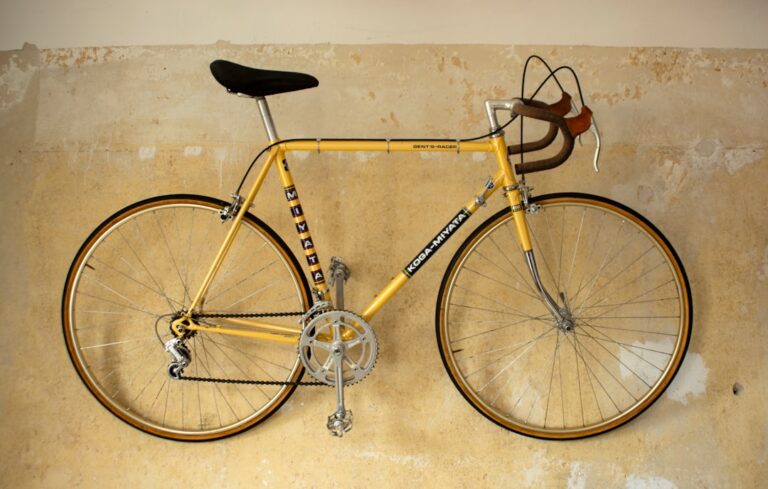
10. Miyata: Japanese Engineering Excellence 🇯🇵
Miyata was unique because they manufactured their own steel tubing, giving them complete control over the quality of their frames. This resulted in some of the most respected production bikes of the era. The Miyata 912 and the Pro Miyata were top-of-the-line models that could compete with anything from Europe.
- Why we love them: The attention to detail is off the charts. Miyata frames are consistently excellent.
- Insider Info: They also built frames for other brands, so you might be riding a Miyata without even knowing it!
👉 Shop Miyata on: eBay
11. Dawes: British Touring Stalwart 🇬🇧
While Raleigh was the giant, Dawes carved out a niche for itself with beautifully crafted bikes, especially their touring models. The Dawes Galaxy is an absolute legend in the world of bicycle touring, known for its comfort, stability, and durability.
- Why we love them: For long-distance comfort and classic British style, a vintage Dawes is hard to beat.
- Perfect for: Building a classic touring or Commuter Bike.
👉 Shop Dawes on: eBay
12. Holdsworth: Classic British Racing Heritage 🇬🇧
With their iconic orange and blue team colors, Holdsworth was a fixture in the British racing scene. A Holdsworth Professional is a highly coveted bike, known for its superb craftsmanship and racing pedigree. They represent a golden age of British frame building.
- Why we love them: The vibrant colors and the pure, unadulterated racing spirit.
- Fun Fact: The brand has been revived in recent years, but the vintage 70s models are the true classics.
👉 Shop Holdsworth on: eBay
13. Gazelle: Dutch Durability & Style 🇳🇱
While known for their upright city bikes, Royal Dutch Gazelle also produced some fine road bikes in the 70s. They were often built with Reynolds 531 tubing and had a reputation for being incredibly well-made and durable.
- Why we love them: They bring a touch of Dutch practicality and quality to the racing world.
- Look for: The “Champion Mondial” model, their top-tier racing frame.
👉 Shop Gazelle on: eBay
14. Ross: American Value & Accessibility 🇺🇸
Ross was another American brand that competed with Schwinn. They produced a huge range of bikes, and while many were entry-level, their higher-end models from the late 70s, like the Ross Signature series, were surprisingly well-made and offer great value today.
- Why we love them: They represent a piece of American cycling history and are an accessible entry point into the vintage world.
- Don’t overlook them: A high-end Ross can be a fantastic and unique find.
👉 Shop Ross on: eBay
15. Columbia: America’s Oldest Bicycle Manufacturer 🇺🇸
With a history stretching back to the 19th century, Columbia was still producing bikes in the 1970s. Like Schwinn and Ross, they made everything from cruisers to lightweights. Their 10-speed models were a common sight on American roads during the bike boom.
- Why we love them: The incredible history. Owning a Columbia is owning a piece of true Americana.
- Legacy: They helped popularize cycling in the US long before the 70s boom.
👉 Shop Columbia on: eBay
16. Huffy: The Everyday American Ride 🇺🇸
Okay, hear us out. While Huffy is mostly known for mass-market bikes, they did sponsor a professional racing team in the 80s with frames built by master builders like Serotta. In the 70s, they were primarily department store bikes, but they are a huge part of the American bike boom story, getting millions of kids and adults on two wheels.
- Why we love them: For the pure nostalgia factor. Many of us had a Huffy as our first “real” bike.
- Perspective: While not a collector’s item in the same vein as a Colnago, they were the workhorses of the decade.
👉 Shop Huffy on: Amazon | Walmart | eBay
17. Sekine: Canadian-Japanese Fusion 🇨🇦🇯🇵
Sekine was a Japanese brand that set up a factory in Manitoba, Canada, in the 1970s. They produced high-quality bikes that were known for their flawless paint and chrome finishes. They were a unique example of global manufacturing during the era.
- Why we love them: The unique Canada-Japan connection and their reputation for outstanding finish quality.
- Look for: The “SHX” and “SHT” models, which were their top-tier offerings.
👉 Shop Sekine on: eBay
18. Apollo: Australian & Canadian Market Presence 🇦🇺🇨🇦
Apollo was a brand name used by the Canadian distributor Fred Deeley, and they were also popular in Australia. The bikes themselves were typically manufactured in Japan by Kuwahara, resulting in high-quality machines that offered great value.
- Why we love them: They are another great example of the high-quality Japanese bikes that were re-branded for different markets.
- Hidden Quality: Finding an Apollo is like finding a high-end Kuwahara in disguise.
👉 Shop Apollo on: eBay
19. Olmo: Italian Racing Pedigree 🇮🇹
Founded by cyclist Giuseppe Olmo, this Italian brand has a rich racing history. Olmo bikes were known for their beautiful craftsmanship and performance, often built with Columbus tubing and decked out in Campagnolo parts.
- Why we love them: They represent the classic Italian road bike: stylish, fast, and full of passion.
- Collector’s Item: A vintage Olmo is a fantastic find for any enthusiast of Italian cycling.
👉 Shop Olmo on: eBay
20. Masi: Legendary Italian Craftsmanship 🇮🇹
Known as “The Tailor,” Faliero Masi was a legendary frame builder. A Masi Gran Criterium from the early 70s, built in the original workshop under the Vigorelli Velodrome in Milan, is one of the most sought-after vintage bikes in the world.
- Why we love them: The mystique and the unparalleled reputation for ride quality. Masi frames are legendary for a reason.
- Caveat: Be aware of the distinction between Italian-made Masis and the later American-made models, though both are highly regarded.
👉 Shop Masi on: eBay
21. Cinelli: The Art of Italian Cycling 🇮🇹
Cinelli is a brand that blends performance with artistry. Their Special Corsa is a timeless classic. They were also famous for their components, like handlebars and stems, which were often the top choice for professional riders.
- Why we love them: The incredible attention to detail, from the fastback seatstay cluster to the sloping fork crown.
- Iconic: A Cinelli is more than a bike; it’s a piece of design history.
👉 Shop Cinelli on: eBay
22. Gios: Blue Blood Italian Racers 🇮🇹
That distinctive “Gios Blue” became famous in the 1970s thanks to the dominant Brooklyn Chewing Gum professional team. A Gios Torino Super Record is an icon of 70s pro racing, known for its no-nonsense performance and robust construction.
- Why we love them: The pro racing heritage and that unforgettable blue paint.
- Built to Race: These bikes were designed to be ridden hard and put away wet. A true workhorse of the pro peloton.
👉 Shop Gios on: eBay
💎 Beyond the Big Names: Lesser-Known 1970s Gems Worth Discovering
While we all love a classic Bianchi or Schwinn, part of the fun is discovering the underdogs. As the folks at The Pro’s Closet point out, “Beyond well-known vintage bicycles like Yeti or Colnago, there are underrated, rare, and forgotten bike brands.” While they mention some later brands, the sentiment holds true for the 70s. Keep an eye out for names like:
- Italvega: A US brand that had its frames built in Italy. They were the precursor to Univega and were known for their high-quality builds.
- Centurion: A Japanese brand that offered fantastic quality, often with Shimano or SunTour components. Their Semi-Professional and Professional models are excellent finds.
- Nishiki: Another high-quality Japanese brand that was popular in North America. Like Centurion, they offered great performance and value.
- Univega: Started by Ben Lawee (who also started Italvega), Univega bikes were designed in the US and built in Japan by Miyata. The quality is, therefore, outstanding.
⚙️ Components of the Era: Drivetrains, Brakes, and Framesets That Defined the 70s
A bike is more than its brand name. The components—the groupset—give it its character and performance. The 70s was a battleground for innovation.
Steel is Real: Frame Materials of the 70s 🚲
In the 1970s, steel was king. The two titans of tubing were:
- Reynolds (UK): The legendary Reynolds 531 (a manganese-molybdenum steel alloy) was the benchmark for performance. It was lightweight (for the time), strong, and provided a wonderfully springy and comfortable ride.
- Columbus (Italy): The Italian answer to Reynolds. Columbus SL and SP tubes were found on nearly every high-end Italian racing bike. They were known for their performance and impeccable quality.
Shifting Gears: Classic Derailleurs & Gearing Systems 🚴 ♂️
Forget electronic shifting. This was the era of friction and feel.
- Campagnolo: The Nuovo Record rear derailleur was the undisputed king. It was beautiful, durable, and graced almost every professional’s bike. It was the dream component.
- SunTour: The Japanese innovator. SunTour’s V-GT and Cyclone derailleurs were technical marvels. Their invention of the slant-parallelogram design allowed for much crisper and more accurate shifting than anything else on the market. Many argue they were technically superior to Campagnolo at the time.
- Shimano: The other Japanese giant was making its mark. The first-generation Dura-Ace group in the mid-70s was a statement of intent, signaling that Shimano was a serious player.
- Simplex: The French manufacturer’s plastic Prestige derailleurs were common on French bikes like the Peugeot UO-8. While lightweight, they didn’t have the best reputation for durability.
Stopping Power: Vintage Brake Setups & Levers 🛑
Brakes in the 70s were… a different experience. Let’s just say you had to plan your stops a bit more.
- Side-Pull Calipers: Dominated the high-end market. Campagnolo Record, Shimano Dura-Ace, and Weinmann 500 were common sights.
- Center-Pull Calipers: Very popular on touring and mid-range bikes. Mafac “Racer” brakes are iconic and were loved for their modulation and power (by 70s standards).
- Brake Levers: Most bikes had non-aero levers, where the brake cable comes out of the top of the lever. This is a key visual cue of a 70s or early 80s bike.
Wheels & Tires: The Rolling Stock of the Decade 💨
Wheels were typically 32 or 36 spokes, laced to low-flange or high-flange hubs. 27″ x 1 1/4″ was the standard clincher tire size for most road bikes, while racers used tubular (sew-up) tires.
❤️ 🩹 Restoring Your 1970s Vintage Bicycle: A Labor of Love & Learning
Found your diamond in the rough? Awesome! Now the real fun begins. Restoring a vintage bike is incredibly rewarding. It’s a journey back in time.
Finding Authentic Parts: The Scavenger Hunt for Retro Bike Parts 🕵️ ♀️
This is half the fun! You become a detective, hunting for that period-correct derailleur or brake lever.
- eBay: The undisputed king for finding “New Old Stock” (NOS) parts and used components.
- Bike Swaps & Flea Markets: The old-school way. You can find incredible deals and meet fellow enthusiasts.
- Online Forums: Websites like BikeForums.net have dedicated classic & vintage sections with for-sale threads and incredibly knowledgeable members.
- Local Bike Co-ops: These non-profit shops often have bins of old parts for cheap. It’s a goldmine for the patient scavenger.
Common Restoration Challenges & Solutions: What to Expect 🛠️
It won’t all be smooth sailing. Here are some common storms you might encounter:
- Stuck Parts: Seatposts and stems can become chemically welded into the frame over time. Patience, penetrating oil, and sometimes a bit of brute force are your friends.
- Weird Threading: French and Italian bikes from this era often used their own proprietary threading standards for things like bottom brackets and headsets. Do your research before you try to force a part! A good local bike shop with an experienced mechanic can be a lifesaver here.
- Sourcing Tires: Finding good quality 27-inch tires can be a little tricky, but brands like Panaracer still make excellent ones.
Where to Find Expert Help & Resources: Your Restoration Tribe 🤝
You’re not alone! The vintage cycling community is massive and incredibly helpful.
- Sheldon Brown’s Website: The late Sheldon Brown’s website (sheldonbrown.com) is the bible of bicycle mechanics. It’s an essential resource for tackling any technical challenge.
- YouTube: There are countless channels dedicated to vintage bike restoration that provide step-by-step visual guides.
- Facebook Groups: Search for groups dedicated to your specific brand (e.g., “Vintage Schwinn Bicycles”) to connect with experts.
🤔 Riding a 70s Classic Today: Pros and Cons of Vintage Cycling
So, can you actually ride these things in the 21st century? Absolutely! But it’s good to go in with your eyes open.
The Unmatched Ride Feel: Why We Love Them 🥰
✅ Comfort: That steel frame soaks up road buzz like a sponge. It’s a smooth, comfortable ride that’s perfect for long days in the saddle. ✅ Connection: With friction shifters and less powerful brakes, you are more connected to the bike and the road. It forces you to be a more mindful and engaged rider. ✅ The Cool Factor: Let’s face it, you’ll get more nods of approval on a classic steel bike than on the latest carbon superbike. It’s a conversation starter.
Modern Upgrades vs. Period Correctness: The Great Debate ⚖️
This is a hot topic in the vintage community. Do you keep it 100% original, or do you make some sensible upgrades for safety and comfort?
- The Purist Approach: Keeping everything exactly as it came from the factory. This is great for collectors and show bikes.
- The “Restomod” Approach: This is our preferred method for a bike you want to ride regularly. Keep the classic frame and soul of the bike, but upgrade key contact points.
- Good upgrades: Modern brake pads (they make a HUGE difference!), new tires, a more comfortable modern saddle, and new bar tape.
- Controversial upgrades: Swapping out the drivetrain for a modern indexed system or changing the wheels to 700c. This can improve performance but takes away from the vintage character.
Ultimately, it’s your bike! Do what makes you happy and gets you riding.
💰 The Collectibility Factor: Investing in Vintage Bikes & Their Value
Can a 50-year-old bicycle be a good investment? Sometimes! The value of vintage bikes can range from a “tenner” found at a car boot sale to thousands of dollars for a rare, pristine model.
What drives value?
- Brand & Model: A top-of-the-line model from a legendary brand (like a Colnago Mexico or a Masi Gran Criterium) will always be valuable.
- Originality & Condition: A bike with its original paint, decals, and components is far more valuable than a repainted or heavily modified one. “New Old Stock” (NOS) parts can fetch a fortune, as one owner in the featured video below noted about sourcing original levers.
- Provenance: Does it have a racing history? Was it owned by someone famous? This can add immense value.
- Rarity: Some bikes, like the 1940 Westfield Compact Sport Tourer also shown in the video, are incredibly rare due to their unique history and low production numbers, making them highly collectible.
While you probably won’t get rich flipping vintage bikes, buying a quality 70s machine is unlikely to lose you money. Think of it as an investment in fun, with the potential for a small financial return down the road.
🥳 Vintage Bike Events & Communities: Connect with Fellow Enthusiasts
One of the best parts of owning a vintage bike is sharing that passion with others. Events like L’Eroica have popped up worldwide, celebrating the “heroic” era of cycling. These events require participants to ride vintage or “period-correct” bicycles, often on gravel or unpaved roads.
It’s a fantastic way to experience these bikes as they were meant to be ridden. As seen in the first YouTube video in this article, events like Eroica Britannia bring out an incredible array of historic machines, from a 1982 Colnago Mexico that’s a perfect replica of a World Championship bike, to a bizarrely wonderful 1979 Flying Gate time trial bike. It’s a rolling museum and a celebration of cycling culture, proving that these old bikes are far from being relics.
🚴 ♀️💨 Our Personal Anecdotes: Tales from the Saddle of a 70s Steed
Here at Bike Brands™, we’ve all got a story. One of our lead mechanics, Dave, has a soft spot for his 1974 Peugeot UO-8. He found it rusting in a neighbor’s shed and bought it for a six-pack. He spent a winter lovingly restoring it, hunting down original parts, and learning the quirks of French bottom brackets.
He says, “It’s not my fastest bike. It’s not my lightest bike. But it’s the bike that makes me smile the most. Every time I shift those downtube levers, I feel connected to a different era of cycling. It’s not about speed; it’s about the experience. It taught me more about bike mechanics than any modern bike ever could. It’s my therapy bike.”
And isn’t that what it’s all about? Finding a machine that brings you joy, teaches you something, and connects you to the rich history of our sport. What will your story be?
✨ Conclusion: The Enduring Legacy of 1970s Bicycles

So, what’s the final verdict on vintage bicycles from the 1970s? Simply put: they’re timeless treasures that offer a unique blend of craftsmanship, history, and ride quality that modern bikes often can’t replicate. Whether it’s the British stalwart Raleigh, the Italian passion of Bianchi and Masi, or the Japanese precision of Fuji and Miyata, each brand tells a story of innovation and culture that shaped cycling as we know it today.
Positives:
- Exceptional ride quality thanks to high-grade steel frames like Reynolds 531 and Columbus tubing.
- Mechanical simplicity that invites hands-on maintenance and learning.
- Iconic aesthetics that turn heads and spark conversations.
- Rich heritage connecting riders to cycling’s golden era.
- Collectibility and potential investment value for rare and well-preserved models.
Negatives:
- Component wear and sourcing parts can be challenging, especially for rare or French-threaded bikes.
- Heavier weight compared to modern carbon or aluminum frames.
- Outdated technology such as friction shifters and non-aero brake levers may require adjustment for new riders.
- Tire and wheel size compatibility can be tricky, given the prevalence of 27-inch wheels.
If you’re after a bike that’s more than just transportation—a bike that’s a piece of rolling history, a conversation starter, and a joy to ride—then a 1970s vintage bicycle is a confident recommendation from all of us at Bike Brands™. Whether you’re restoring a barn find or hunting for a pristine classic, these bikes offer a rewarding experience that blends nostalgia with genuine cycling pleasure.
Remember Dave’s story? That Peugeot UO-8 wasn’t the fastest or lightest, but it was the most joyful. That’s the magic of vintage bikes. They’re not just machines; they’re companions on a journey through time.
🔗 Recommended Links: Your Vintage Cycling Resource Hub
Ready to start your vintage bike adventure? Here are some great places to shop and learn more:
- 👉 Shop Raleigh Bikes on:
- 👉 Shop Peugeot Bikes on:
- 👉 Shop Schwinn Bikes on:
- 👉 Shop Motobécane Bikes on:
- 👉 Shop Bianchi Bikes on:
- 👉 Shop Gitane Bikes on:
- 👉 Shop Mercier Bikes on:
- 👉 Shop Fuji Bikes on:
- 👉 Shop Panasonic Bikes on:
- 👉 Shop Miyata Bikes on:
- 👉 Shop Dawes Bikes on:
- 👉 Shop Holdsworth Bikes on:
- 👉 Shop Gazelle Bikes on:
- 👉 Shop Ross Bikes on:
- 👉 Shop Columbia Bikes on:
- 👉 Shop Huffy Bikes on:
- 👉 Shop Sekine Bikes on:
- 👉 Shop Apollo Bikes on:
- 👉 Shop Olmo Bikes on:
- 👉 Shop Masi Bikes on:
- 👉 Shop Cinelli Bikes on:
- 👉 Shop Gios Bikes on:
Recommended Books on Vintage Bicycles
-
“The Dancing Chain: History and Development of the Derailleur Bicycle” by Frank Berto — A must-read for understanding vintage drivetrain technology.
Amazon Link -
“Classic Road Bike Maintenance” by Lennard Zinn — Perfect for restoring and maintaining your 70s classic.
Amazon Link -
“Raleigh: The Complete Story” by Richard Ballantine — A deep dive into one of the most iconic vintage brands.
Amazon Link
Frequently Asked Questions (FAQ)

What are the forgotten bike brands?
Many vintage bike enthusiasts focus on the big names like Bianchi or Schwinn, but there’s a treasure trove of lesser-known brands from the 1970s worth discovering. Brands such as Italvega, Centurion, Nishiki, and Univega often flew under the radar but produced high-quality bikes, frequently built in Japan with excellent components. These brands sometimes represent better value and unique designs compared to their more famous counterparts. For a deeper dive, check out The Pro’s Closet article on forgotten vintage bike brands.
Read more about “What Bike Brand Starts With J? Top 10 Revealed for 2025 🚲”
What were the most popular vintage bicycle brands in the 1970s?
The 1970s bicycle boom was dominated by several key players:
- Raleigh (UK): The largest manufacturer with a wide range of models.
- Peugeot (France): Known for elegant road bikes and the famous PX-10.
- Schwinn (USA): America’s household name with models from cruisers to the Paramount racing bike.
- Bianchi (Italy): The iconic Celeste-colored racing machines.
- Fuji and Miyata (Japan): Rising stars known for quality and innovation.
These brands combined heritage, quality, and accessibility, making them household names during the decade.
Read more about “16 Must-Know Vintage Bicycle Brands List 🚲 (2025 Edition)”
How can I identify authentic 1970s vintage bicycles?
Identifying a genuine 1970s vintage bike involves several key factors:
- Frame Tubing: Look for Reynolds 531 or Columbus tubing decals.
- Lugged Steel Frames: Most quality bikes had lugged construction.
- Components: Presence of period-correct parts like Campagnolo Nuovo Record derailleurs or SunTour V-GT.
- Decals and Head Badges: Original branding and decals can help date and authenticate.
- Threading Standards: French and Italian bikes often have unique threading, which is a clue to origin and era.
Cross-referencing these details with resources like VeloBase or Sheldon Brown’s website can help confirm authenticity.
Read more about “What Is the Name of Vintage Bicycles? 🚲 Top 15 Iconic Brands (2025)”
Which 1970s bicycle brands are considered the most collectible today?
Collectors prize brands that combine rarity, provenance, and historical significance. Top collectible brands include:
- Colnago: Especially the Mexico and Master models.
- Masi: Early Italian-made Gran Criterium frames.
- Bianchi: High-end models with original Celeste paint.
- Cinelli: Special Corsa and other iconic models.
- Schwinn Paramount: Hand-built American racing bikes.
- Olmo and Holdsworth: Known for craftsmanship and racing heritage.
Condition and originality dramatically affect value. Bikes with original paint, decals, and components command the highest prices.
Read more about “Do Schwinn Bikes Have Value? Discover 10 Models Worth Collecting! 🚴 ♂️”
What are the key features of vintage bicycles from the 1970s?
Vintage 1970s bicycles typically feature:
- Steel lugged frames made from Reynolds 531 or Columbus tubing.
- Downtube friction shifters instead of indexed or electronic shifting.
- Non-aero brake levers with cables exiting from the top.
- 27-inch wheels with 1 1/4″ tires (common on road bikes).
- Classic component groupsets from Campagnolo, SunTour, Shimano, or Simplex.
- Distinctive head badges and decals reflecting brand heritage.
These features combine to create the unique ride feel and aesthetic that define the era.
Read more about “1970s Bicycles for Sale: Your Guide to Finding the Perfect Vintage Ride … 🚲”
📚 Reference Links: Our Sources & Further Reading
- List of bicycle brands and manufacturing companies — Wikipedia
- The Pro’s Closet: Forgotten Vintage Bike Brands
- Sheldon Brown’s Bicycle Technical Info
- VeloBase: Vintage Bicycle Database
- Raleigh Official Website
- Peugeot Bicycles
- Schwinn Bikes
- Bianchi Official Site
- Fuji Bikes
- Miyata Bikes
- Cinelli USA
- Gazelle Bikes
Ready to start your vintage bike journey? Dive into our Bike Brand Guides and Bike Reviews for even more expert insights!