Support our educational content for free when you purchase through links on our site. Learn more
Top 10 Bike Brands Inspired by Mountain Ranges 🏔️

The top bike brands inspired by mountain ranges include Rocky Mountain Bicycles, with a clear connection to the Rocky Mountains; Fuji Bikes, named for Mount Fuji; and a handful of mountain-sounding names that deserve a closer fact-check. The key is knowing which namesakes are verified—and choosing a bike by its fit, design, and riding purpose, not just its mountain-ready image.
We’ve all seen a rugged name and imagined a bike happily charging up a rocky trail. But a dramatic logo can’t tell you whether a model is a cross-country hardtail, a full-suspension trail bike, or a commuter. We’ll separate the confirmed connections from the scenic speculation, then show you what to check before you ride away.
Key Takeaways
- Rocky Mountain Bicycles is the clearest established bike-brand match for a mountain-range-inspired name.
- Fuji Bikes is named for Mount Fuji, an individual mountain—not a range.
- Names like Sierra, Alpine, and Atlas aren’t proof of a brand’s origin. Check the company’s official history.
- Choose a bike by its intended riding style, fit, geometry, and components, not by its name alone.
- Explore Rocky Mountain Bicycles and Fuji Bikes, or browse our Bike Brand Guides and Bike Reviews for more comparisons.
Table of Contents
- ⚡️ Quick Tips and Facts
- 🏔️ How Mountain Ranges Inspire Bike Brand Names
- What Counts as a Mountain-Range-Inspired Brand?
- Name Inspiration vs. Bike Design
- 🔎 How We Chose These Mountain-Inspired Bike Brands
- Brand History, Reputation, and Riding Focus
- How to Interpret Brand Names and Place References
- 🚵 Top Bike Brands Inspired by Mountain Ranges
- 1. Rocky Mountain Bicycles
- 2. Fuji Bikes
- 3. Sierra Bikes
- 4. Alpine-Inspired Bike Brands
- 5. Atlas Mountain-Inspired Bike Brands
- 6. Andes-Inspired Bike Brands
- 7. Himalaya-Inspired Bike Brands
- 8. Pyrenees-Inspired Bike Brands
- 9. Appalachian-Inspired Bike Brands
- 10. Sierra Nevada-Inspired Bike Brands
- 🧭 Mountain-Inspired Namesakes: What’s Verified and What’s Not
- 🚲 Choosing the Right Bike Brand for Your Riding Style
- Mountain Bikes for Trail, Enduro, and Downhill Riding
- Road, Gravel, and Comuter Bikes
- Fit, Frame Materials, and Components
- 🛠️ Buying Tips: How to Check a Brand Before You Buy
- Warranty, Dealer Support, and Replacement Parts
- Reviews, Test Rides, and Used-Bike Checks
- 🌄 Are Mountain-Inspired Bike Brands Built for the Mountains?
- ✅ Quick Takeaways
- Conclusion
- Recommended Links
- FAQ
- Which bike brands are named after mountain ranges?
- Is Rocky Mountain a Canadian bike brand?
- Does Fuji Bikes take its name from Mount Fuji?
- Are mountain-inspired brands better for mountain biking?
- What should I compare when choosing a bike brand?
- Reference Links
⚡️ Quick Tips and Facts
The short version: mountain-range names can make a bike brand feel rugged, but the name alone doesn’t prove where a company started, what its bikes are designed for, or whether it was named after a particular range. Our first recommendation is to separate verified brand history from mountain-flavored marketing.
| Quick fact | What to know |
|---|---|
| A clear mountain-range namesake | Rocky Mountain Bicycles is a Canadian bicycle brand whose name evokes the Rocky Mountains. |
| A famous peak, not a range | Fuji Bikes takes its name from Mount Fuji, a mountain in Japan—not a mountain range. |
| A familiar range name | “Sierra” appears in bicycle and outdoor product names, but verify the specific company and its history before treating it as a confirmed range-inspired bike brand. |
| A mountain-style name is not a design spec | Check the actual bike’s frame, geometry, suspension, tires, brakes, and intended use. |
| Choose for your trails | A hardtail can suit smoother routes and climbing; full suspension generally helps on rougher, more technical terrain. Match the bike to the riding, not just the scenery on the logo. |
| Good research beats good vibes | Check a brand’s official model information, warranty, dealer support, and independent reviews. Our Bike Brand Guides and Bike Reviews can help with the next step. |
If you’re wondering what bike brand has a mountain in the name, start with our guide to mountain-named bike brands. One small distinction matters: a brand may refer to a mountain, a mountain range, a region, or simply a rugged image. Those aren’t interchangeable.
🏔️ How Mountain Ranges Inspire Bike Brand Names
Mountain names carry instant associations: big climbs, rough trails, fresh air, and the sort of descent that makes you check your brake pads twice. Brands may draw on a real landscape, their hometown, a founder’s experience, or a broader outdoor identity.
But there’s a catch: a name is not proof of a namesake. We looked for official brand histories and reliable references rather than assuming that every “Alpine,” “Sierra,” or “Atlas” in a company name points to a specific mountain range.
What Counts as a Mountain-Range-Inspired Brand?
For this guide, we use a practical evidence standard:
- Confirmed range connection: The company or a reliable historical source explicitly connects its name or identity to a mountain range.
- Mountain or peak reference: A verified connection to a single mountain, such as Mount Fuji. That’s mountain-inspired, but not range-inspired.
- Suggestive branding: The name sounds mountainous, but the brand does not substantiate the connection. We label this as unverified rather than presenting it as fact.
- Mountain-bike brand: A company makes mountain bikes. That alone does not mean its name comes from a mountain range.
| Evidence level | Example | How to describe it accurately |
|---|---|---|
| Verified range-associated name | Rocky Mountain Bicycles | A bike brand with a clear Rocky Mountain association |
| Verified mountain name | Fuji Bikes | Named for Mount Fuji, not a range |
| Unverified or ambiguous name | A brand using “Alpine,” “Sierra,” “Atlas,” or “Andes” without a documented naming history | Mountain-sounding name; origin needs confirmation |
| Product category only | A brand selling trail or enduro bikes | Mountain-bike maker, not necessarily mountain-range-inspired |
We’d rather give you a shorter, more trustworthy list than fill the page with companies whose names merely look good next to a picture of a ridgeline. 🏔️
Name Inspiration vs. Bike Design
A mountain-inspired identity can be a nice bit of brand character. It cannot tell you whether a bike will suit your terrain. Look for specifics such as:
- Frame type: hardtail or full suspension
- Suspension travel: the amount the fork and shock can compress
- Geometry: how the frame balances climbing, stability, and steering
- Tires: width and tread suited to your surfaces
- Brakes: disc-brake type, rotor size, and serviceability
- Intended discipline: cross-country (XC), trail, enduro, downhill, or another category
For a useful overview of those riding categories, compare the BikesOnline mountain-bike collection. Its category guidance discusses hardtail, dual-suspension, trail, enduro, downhill, cross-country, and dirt-jump bikes. That’s helpful for understanding bike types, but it does not identify mountain-range-inspired brands or verify brand-name origins.
🔎 How We Chose These Mountain-Inspired Bike Brands
We prioritized brands with a defensible connection to a mountain or range, then considered whether the company makes bicycles and provides useful information about its products. When we couldn’t verify the origin, we say so. That keeps this guide honest—and gives you a better shopping checklist than a list of names assembled by squinting at a map.
Brand History, Reputation, and Riding Focus
When researching a bicycle company, we recommend checking four things:
- Official brand history: Does the company explain its name or founding story?
- Current product range: Does it actually sell bicycles, and what kinds?
- Technical details: Are the intended use and specifications clearly stated?
- Support: Can you find warranty terms, service information, replacement parts, and local dealers?
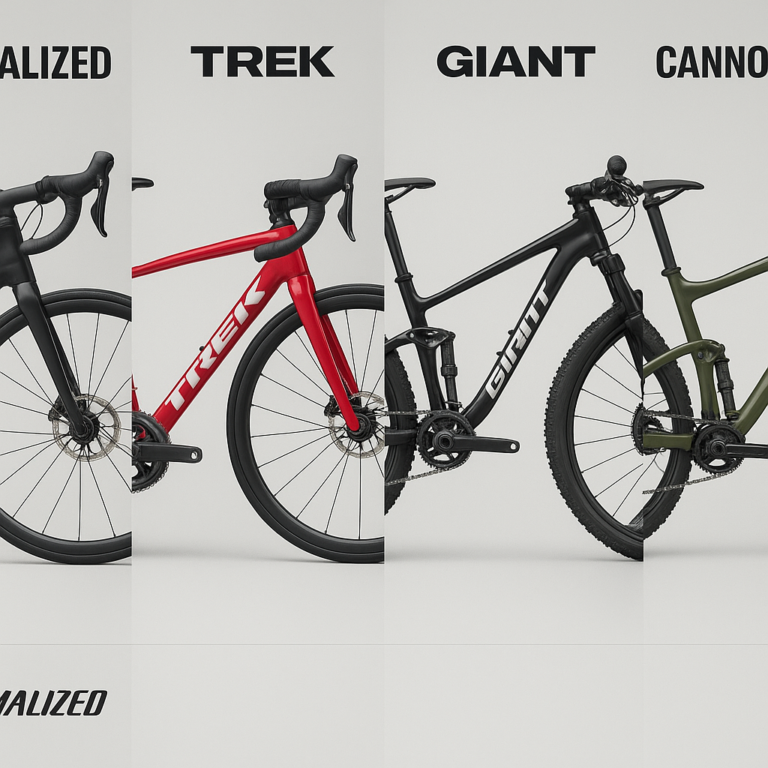
Brand reputation also depends on the rider’s needs. A cross-country racer may prize low weight and climbing efficiency; a downhill rider may care more about suspension, braking, and stability. The broad brand overview in the featured video also emphasizes how different major makers—including Specialized, Giant, Trek, Cannondale, SCOTT, and Orbea—serve different riding and performance niches. It’s a useful reminder that brand size and brand fit are not the same thing.
For independent perspectives, read reviews that identify the exact model and test conditions. A general review of a company can’t tell you how a specific frame fits your body or behaves on your home trail. Browse our bike reviews and compare them with official specifications before buying.
How to Interpret Brand Names and Place References
A little geography prevents a lot of accidental bike trivia:
- A mountain is an individual landform.
- A mountain range is a chain or group of mountains.
- A region may be named for its landscape without being a mountain range.
- A brand story should be supported by the company or a reliable historical source.
For example, Fuji refers to Mount Fuji. It would be inaccurate to call Fuji a brand named after the Japanese Alps or another range without evidence. Likewise, a company called “Alpine” may be using a general word rather than claiming a direct connection to the Alps.
🚵 Top Bike Brands Inspired by Mountain Ranges
Here’s the honest landscape: Rocky Mountain Bicycles is the clearest established bicycle-brand example in this list with a direct mountain-range association. Fuji is a notable mountain-inspired name, but it refers to a peak. Other names below are included as research leads or geographic inspiration categories—not as confirmed brands unless an origin can be substantiated.
| Brand or name reference | Geography connection | Evidence status | Best next step |
|---|---|---|---|
| Rocky Mountain Bicycles | Rocky Mountains | Clear, established association | Browse the brand’s current bike range |
| Fuji Bikes | Mount Fuji, Japan | Mountain name, not a range | Review its official history and product lineup |
| Sierra-named bicycle products or companies | “Sierra” may refer to a range or place | Verify the exact company | Check its official about page and model details |
| Alpine-named bicycle companies or products | Alps or a general mountain theme | Verify the exact company | Don’t assume an Alpine name means Alpine origin |
| Atlas-, Andes-, Himalaya-, or Pyrenees-inspired names | Named mountain regions or ranges | Treat as unverified without source evidence | Confirm the legal brand identity and naming story |
| Appalachian- or Sierra Nevada-inspired names | Regional or range references | Treat as unverified without source evidence | Check official history before citing a namesake |
1. Rocky Mountain Bicycles
Rocky Mountain Bicycles is the strongest match for the search intent: a real bicycle brand with a name closely associated with the Rocky Mountains. Its official site is the right place to verify current models and intended uses; don’t assume that every bike bearing the name is designed only for steep, rugged trails.
What we like about the name: it signals an outdoor, mountain-focused identity without requiring much explanation.
What you should check on an actual bike:
- Is it a hardtail or full-suspension model?
- Is the bike intended for cross-country, trail, enduro, or another discipline?
- Does the frame size and geometry suit your reach and riding position?
- Are the suspension and components appropriate for the trails you ride?
- Is there a local dealer or service option?
Our rider’s take: when a trail gets rocky and the descent starts demanding attention, we want the suspension and brakes to do the talking—not the head badge. The Rocky Mountain name is a good cue to investigate the lineup, not a substitute for a test ride.
For more company comparisons, check our Bike Brand Guides.
2. Fuji Bikes
Fuji Bikes takes its name from Mount Fuji, Japan’s iconic peak. It belongs in a guide to mountain-inspired bicycle brands, but the distinction matters: Mount Fuji is a single mountain, not a mountain range.
Fuji has offered bicycles across multiple categories over its history, so don’t infer that a Fuji-branded bike is automatically a mountain bike. Visit the official site to see its current range and specifications, then compare those details with your riding needs.
Pros
- A recognizable name with a well-known geographic association
- A broad brand identity that can span more than one bicycle category
Things to verify
- Which models are currently available in your market
- The bike’s intended use and component specification
- Warranty coverage, dealer support, and replacement-part access
A name can get you interested; the model sheet should get you confident. Browse the official Fuji Bikes site before narrowing down a specific bike.
3. Sierra Bikes
“Sierra” sounds like it belongs on a trail sign, but the word alone does not establish that a particular bicycle brand was named after the Sierra Nevada or another range. Companies can share names, and “Sierra” may refer to a place, a product line, or a general outdoor image.
Before treating any Sierra-named company as a mountain-range-inspired bike brand:
- Identify the exact company and country of operation.
- Check its official company history or “About” page.
- Confirm that it manufactures bicycles, not only accessories or other outdoor goods.
- Look for independent reporting that supports the naming claim.
We’re deliberately not calling an unverified name a confirmed bicycle brand. That’s less flashy than a long list, but much more useful if you’re researching a real bike to buy.
4. Alpine-Inspired Bike Brands
“Alpine” can point to the Alps, but it is also a common word for a mountain environment. Without a company history linking its name to the Alps, the connection remains suggestive rather than verified.
When you see an Alpine-branded bicycle or retailer, check:
- The company’s legal name and official website
- Whether it makes complete bikes or sells other brands
- Where the brand was founded and where it operates
- Whether the model is meant for road, gravel, commuting, or mountain biking
The Alps are a real and well-known mountain range; that does not mean every business using “Alpine” was named after them. Nice scenery, shaky evidence: a classic combination.
5. Atlas Mountain-Inspired Bike Brands
The Atlas Mountains are a major mountain system in North Africa, but we could not confirm a prominent bicycle brand whose name is definitively derived from the Atlas Mountains. Treat “Atlas” as a research clue, not proof.
If you find an Atlas-named cycling company, investigate the exact product and the company’s origin story. A strong candidate should have an official history, a real bicycle lineup, and support information you can verify. For background on mountain-bike types and features, the BikesOnline mountain-bike guide is useful—but it isn’t evidence of an Atlas brand connection.
6. Andes-Inspired Bike Brands
The Andes are among the world’s best-known mountain ranges, yet a brand name that includes “Andes” does not automatically establish an Andes-inspired bicycle company.
If you’re looking at a local or regional Andes-named maker, check whether it:
- Builds complete bicycles or only frames and components
- Provides model-specific geometry and material information
- Has a verifiable service and warranty process
- Explains the name in its own company history
Regional cycling brands can offer valuable local knowledge, especially about terrain and service. We just want the name-origin claim to be backed by evidence rather than a guess.
7. Himalaya-Inspired Bike Brands
The Himalaya name suggests altitude and demanding terrain, but that image is not a product specification. A bicycle described as “Himalayan” could be a touring bike, a mountain bike, or simply a product with an evocative name.
Before buying, inspect the intended use, frame construction, gearing, wheels, brakes, and support network. On long trips or remote trails, dependable serviceability can matter more than a dramatic paint scheme. If the company doesn’t publish clear specifications, ask a qualified shop before you commit.
8. Pyrenees-Inspired Bike Brands
The Pyrenees form a mountain range between France and Spain, but we don’t treat every Pyrenees reference in cycling as proof of a bike-brand namesake. It might instead refer to an event, route, shop, or product line.
If you’ve found a Pyrenees-named brand, verify the company itself and its bicycle products. Then compare the bike’s design to your actual riding: steep climbs, rough descents, paved touring routes, and gravel roads all make different demands.
9. Appalachian-Inspired Bike Brands
The Appalachians are closely tied to outdoor recreation in eastern North America. Still, an Appalachian-themed business or trail name is not necessarily a bicycle manufacturer, and a brand using the word may not be named after the range.
For an Appalachian-area riding setup, think about the terrain you’ll actually cover: rocky singletrack, roots, long climbs, rail trails, or mixed-surface touring. Then choose a bike category and tire setup that fits. Our city-bike category and electric-bike category can help if your rides mix trails with everyday travel.
10. Sierra Nevada-Inspired Bike Brands
The Sierra Nevada is a specific mountain range, while “Sierra” is also a widely used name. We found no basis for treating every Sierra-named cycling product or company as a confirmed Sierra Nevada namesake.
For trustworthy research, look for a direct explanation from the manufacturer. Then inspect the bike’s specs: mountain geography might make a great origin story, but it can’t tell you whether the bike has the right frame size, suspension, or tires.
🧭 Mountain-Inspired Namesakes: What’s Verified and What’s Not
Search results can blur three different claims: “this brand sells mountain bikes,” “this brand has a mountain-themed name,” and “this brand was named after a particular range.” They are not equivalent.
| Claim | What would support it? | Example of careful wording |
|---|---|---|
| The company makes mountain bikes | Current product catalog | “The brand sells mountain bikes.” |
| The name references a mountain | Official history or reliable reporting | “The brand name refers to Mount Fuji.” |
| The name references a range | A direct, documented link to that range | “The brand identifies the Rocky Mountains as its namesake.” |
| The bike is suitable for a certain terrain | Model-specific design and test information | “This model is intended for trail riding.” |
We also checked the competing material provided for this topic. The GHOST mountain-bike collection lists models such as LECTOR and RIOT, including carbon and aluminum options and 12-speed drivetrains, but it does not establish that GHOST is named after a mountain range. Its product copy says, “Let yourself be inspired by new products and exclusive highlights.” That is a product invitation, not a naming-history claim.
Likewise, the supplied BikesOnline mountain-bike collection covers bike types and riding features; it does not identify brands inspired by mountain ranges. And the supplied Mikaela Shifrin Facebook post discusses an Oakley design “inspired by simplicity,” not a bicycle brand or a mountain range. That post isn’t useful evidence for this particular question.
The distinction is simple: use brand histories to verify origins, and product pages or tests to judge bikes.
🚲 Choosing the Right Bike Brand for Your Riding Style
A brand name can help you discover a company. Your route, body fit, and maintenance needs should decide whether its bike comes home with you.
| Riding style | Typical bike type | What to prioritize |
|---|---|---|
| Smooth trails, fitness, and efficient climbing | XC hardtail or XC full suspension | Low weight, efficient pedaling, suitable gearing |
| Mixed singletrack and general trail riding | Trail hardtail or trail full suspension | Versatile geometry, balanced suspension, strong brakes |
| Step, technical descents | Enduro or downhill | Stability, suspension capability, powerful brakes |
| Paved commutes and errands | City or hybrid bike | Fit, practical gearing, lights and rack compatibility |
| Mixed pavement and gravel | Gravel bike | Tire clearance, comfortable geometry, reliable braking |
| Longer rides with electrical assistance | E-bike suited to the route | Motor and battery support, service availability, total bike weight |
BikesOnline’s category descriptions also separate XC, trail, enduro, downhill, freeride, and dirt-jump bikes. That’s a helpful map of the categories, but the right choice still depends on your terrain and skill, not the category name alone.
Mountain Bikes for Trail, Enduro, and Downhill Riding
Hardtail: simple, efficient, and easier to maintain
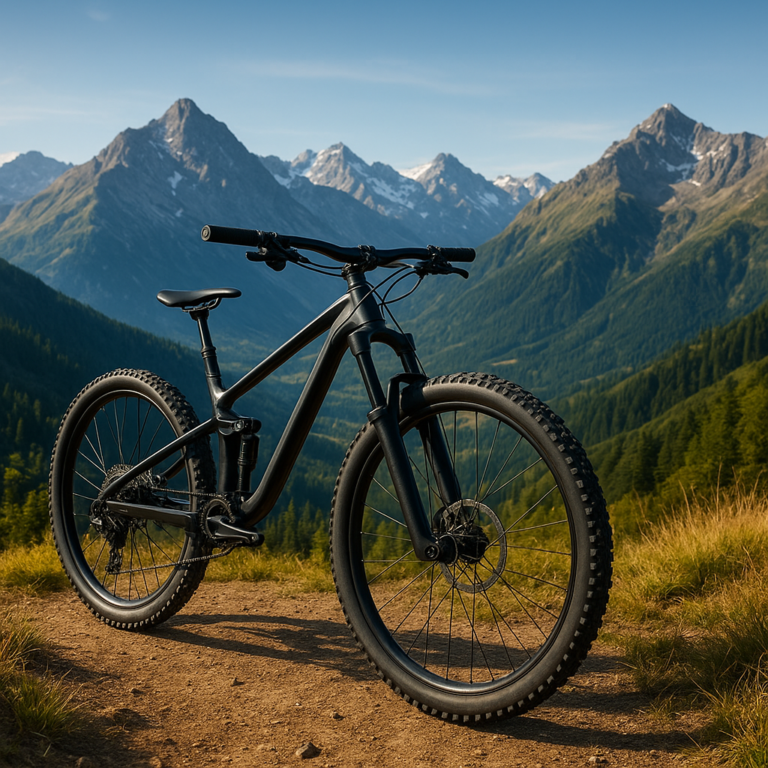
A hardtail typically has a suspension fork at the front and a rigid rear end. It can be a practical match for smoother trails, climbing, cross-country riding, and riders who value straightforward maintenance.
Advantages
- Often lighter and mechanically simpler than a comparable full-suspension bike
- Efficient on smoother surfaces and climbs
- Fewer suspension parts to service
Trade-offs
- Less rear-wheel comfort and traction on rough, choppy descents
- Can feel demanding on repeated impacts or technical terrain
Full suspension: more control on rough trails
A full-suspension bike has a front fork and a rear shock. It can improve comfort and control over rough ground, but suspension setup and maintenance matter.
Advantages
- Better impact absorption on many technical trails
- More comfort and traction on rough descents
- Can help riders stay composed over uneven surfaces
Trade-offs
- More moving parts and suspension maintenance
- The extra system can add weight and complexity
- Poor setup can make a capable bike feel sluggish or unbalanced
Trail, enduro, and downhill: similar scenery, different jobs
- Trail bikes aim for a versatile balance between climbing and descending.
- Enduro bikes prioritize capable descending while remaining pedalable for climbs.
- Downhill bikes are built around steep descents, bike parks, and demanding impacts; they are generally not the best choice for everyday pedaling.
- Cross-country bikes prioritize speed and efficient climbing.
- Dirt-jump bikes are designed for jumps, pump tracks, and tricks, not long mountain tours.
For a side-by-side overview of those categories, visit BikesOnline’s mountain-bike collection. Its descriptions highlight common strengths such as wide tires, suspension, and disc brakes, but specs vary by model.
Road, Gravel, and Comuter Bikes
A mountain-inspired brand may sell bikes outside the mountain-bike category. If your riding includes paved roads, gravel paths, or daily errands, a road, gravel, or city bike may suit you better.
- Road bikes: built for paved riding, with models ranging from endurance-focused to race-oriented.
- Gravel bikes: designed for mixed surfaces, with tire clearance and geometry that support rougher roads.
- City bikes: prioritize practical everyday riding, fit, accessories, and easy use.
- E-bikes: add motor assistance, but the ride feel, service requirements, and battery support depend on the system.
Browse our guides to city bikes, electric bikes, and bike accessories if your bicycle needs to do more than chase singletrack.
Fit, Frame Materials, and Components
A well-known brand can still sell a bike that doesn’t fit you. Start here:
- Choose the right category for your usual terrain.
- Check the size chart using your height and relevant measurements.
- Compare geometry, especially reach and standover for mountain bikes.
- Assess frame material: aluminum and carbon have different costs, weights, repair considerations, and ride characteristics.
- Inspect the components: fork, shock, drivetrain, brakes, wheels, and tires.
- Take a test ride if possible; adjust the fit with a qualified shop.
- Confirm support: warranty, parts, and servicing in your area.
There’s no universal “best” frame material. A durable, serviceable bike that fits you is a better choice than a lighter one that doesn’t.
🛠️ Buying Tips: How to Check a Brand Before You Buy
Use this quick process to turn a mountain-inspired name into an informed decision:
- Confirm the brand identity. Make sure you’ve found the bicycle manufacturer, not a similarly named shop or accessory brand.
- Verify the naming story. Look for the company’s official history or reliable independent coverage.
- Select a model for your riding. Don’t shop by logo alone.
- Read the specification sheet. Confirm size, materials, suspension, drivetrain, brakes, and intended use.
- Check fit and test-ride options. A local shop can help you compare sizes and setup.
- Inspect support. Read warranty terms, dealer information, and service requirements.
- Look for model-specific reviews. Prefer detailed test reports over vague claims about a whole brand.
One perspective worth keeping in mind: the supplied competitor summary of the GHOST bike range includes model and drivetrain information, but notes that the page offers no product ratings or reviews. That’s exactly why we separate manufacturer specifications from independent ride assessment.
Warranty, Dealer Support, and Replacement Parts
Before you buy, confirm:
- Where warranty claims are handled
- Whether a local dealer can service the bike
- Whether suspension and motor systems have nearby support
- How readily you can source wear parts, such as brake pads and drivetrain components
- Whether the warranty applies in your location and to second-hand buyers
For e-bikes, check the support network for the motor and battery, not only the frame. Our electric-bike guides cover more of those ownership questions.
Reviews, Test Rides, and Used-Bike Checks
When reading owner reviews, look for patterns rather than treating one glowing or furious post as the final verdict. Ask whether the reviewer rode the same model year, size, and component build.
If you’re considering a used bike, inspect:
- Frame cracks, dents, and damage near welds or carbon joints
- Fork and rear-shock leaks or rough movement
- Wheel trueness, spoke condition, and bearing play
- Brake feel, rotor condition, and pad wear
- Chain wear and drivetrain shifting
- Serial number and proof of ownership
A test ride can reveal what photos can’t: awkward reach, uncomfortable saddle position, strange noises, or handling that doesn’t suit your pace. You can read more model comparisons in our Bike Reviews.
🌄 Are Mountain-Inspired Bike Brands Built for the Mountains?
Sometimes—but the name can’t answer that. A brand may be named for a mountain range and sell bikes for road, gravel, commuting, or mountain riding. Conversely, a brand with no mountain in its name may make excellent trail and enduro bikes.
The supplied BikesOnline guide describes mountain bikes as tools for rocky paths, muddy tracks, steep climbs, and winding descents. It highlights wide tires, suspension, and disc brakes as common features, and distinguishes hardtails from full-suspension designs. Those are useful category-level insights; they are not proof that a particular brand is mountain-range-inspired or that every model suits every trail.
Our practical rule: read the model description, inspect the geometry and components, and match them to your routes. The name can set the mood. The specs—and your test ride—make the decision.