Support our educational content for free when you purchase through links on our site. Learn more
🚲 Trek Bicycle Brand History: 50+ Years of Rocket Science (2026)

Trek transformed from a five-person operation in a red barn into a global cycling empire by mastering aerospace-grade carbon fiber and strategically acquiring legendary brands like Gary Fisher and Bontrager. Our deep dive into the Trek bicycle brand history reveals how they turned “rocket science” into the world’s most dominant road and mountain bikes, despite navigating massive scandals and industry-shaking recalls.
It all started in 1976 in Waterloo, Wisconsin, where founders Dick Burke and Bevil Hogg hand-brazed steel frames in a literal red barn, selling just 90 units in their first year. Fast forward today, and that same company produces the lightest carbon frames on the planet and sponsors the most decorated teams in professional racing.
But how did a small Midwestern shop outmaneuver European giants and survive the doping era to become a household name? The answer lies in their relentless obsession with material science and their willingness to take massive risks on new technologies like the 29-inch wheel and full-suspension designs.
Key Takeaways
- 🏭 Humble Beginings: Trek started in 1976 in a red barn with just five employees, hand-brazing steel frames before revolutionizing the industry with OCLV Carbon.
- 🚀 Strategic Acquisitions: The brand’s dominance was cemented by buying Gary Fisher (mountain bikes), Klein (aluminum), Bontrager (components), and Electra (city bikes).
- 🏆 Pro Racing Legacy: From the US Postal Service team to modern Trek-Segafredo, Trek bikes have won countless Tours de France and World Championships, driving real-world innovation.
- ⚠️ Resilience: The company survived the Lance Armstrong doping scandal and a massive 195 recall to emerge as a more transparent and sustainable industry leader.
- 🌍 Global Impact: Beyond selling bikes, Trek drives community through World Bicycle Relief, Trek Travel, and a massive network of local dealers.
Table of Contents
- ⚡️ Quick Tips and Facts
- 🏭 From a Basement in Waterloo to a Global Giant: The Trek Bicycle Brand History
- 🚀 The Rocket Science Era: How Trek Revolutionized Frame Materials and Manufacturing
- 🏆 Racing to Make Bikes Better: Trek’s Dominance in Professional Cycling
- 🚵 ♂️ The Mountain Bike Revolution: Trek’s Pivotal Role in Off-Road Evolution
- 🛣️ Road, Gravel, and All-Road: Trek’s Expansion Beyond the Dirt
- ⚡️ The Electric Shift: Trek’s Journey into E-Mobility and E-Bike Innovation
- 🔧 Inside the Factory: A Deep Dive into Trek’s OCLV Carbon and Alpha Aluminum Technologies
- 🌍 Loved the World Over: Trek’s Global Impact and Community Building
- 🛒 How to Choose the Right Trek: A Guide to Their Diverse Model Lineup
- 🔍 Trek vs. The Competition: How the Brand Stacks Up Against Specialized, Giant, and Cannondale
- 🛠️ Maintenance, Warranties, and Ownership: What You Need to Know About Your Trek
- 🎨 Customization and Accessories: Personalizing Your Ride with Trek’s Ecosystem
- 📜 The Future of Trek: Upcoming Innovations and Sustainability Goals
- 🏁 Conclusion
- 🔗 Recommended Links
- 📚 Reference Links
⚡️ Quick Tips and Facts
Before we rev up the engines and take a deep dive into the red barn that started it all, let’s hit the highlights. If you’re in a rush but still want to sound like you know your OCLV from your Alpha Aluminum, here’s the cheat sheet from the Bike Brands™ garage:
- 📍 The Origin Story: Trek wasn’t born in a high-tech lab; it started in 1976 in a literal red barn in Waterloo, Wisconsin, with just five employees and a dream to build better steel frames.
- 🚀 The Rocket Science: They didn’t just build bikes; they borrowed tech from the aerospace industry. Their proprietary OCLV (Optimum Compaction, Low Void) carbon process is still the gold standard for lightweight, stiff frames today.
- 🏆 The Pro Pedigree: From the US Postal Service team (yes, the one with the seven yellow jerseys) to the modern Trek-Segafredo squad, Trek has dominated the Tour de France, World Championships, and the Olympics.
- 🛒 The Empire: It’s not just “Trek” anymore. Through smart acquisitions, they own Bontrager (the world’s largest bike component brand), Electra (famous for the “Flat Foot” technology), and Diamant (Germany’s oldest bike brand).
- ⚠️ The Controversies: Like any giant, they’ve had stumbles. We’ll cover the Lance Armstrong fallout, the Chris Farley “Farley” fat bike lawsuit, and the massive 195 recall later in the article.
- 🌍 Global Reach: While headquartered in the American Midwest, their bikes are designed in Wisconsin but manufactured in Taiwan, Cambodia, and China, with high-end custom builds still happening in the US.
Curious about other brands with mountain-themed names? If you’re wondering what bike brand has a mountain in the name, check out our deep dive on Mountain Bike Brands with “Mountain” in the Title right here at Bike Brands™.
🏭 From a Basement in Waterloo to a Global Giant: The Trek Bicycle Brand History
You know that feeling when you walk into a garage and smell the grease, the fresh paint, and the promise of adventure? That’s exactly where it all began for Trek. But how did a small operation in rural Wisconsin become a billion-dollar global powerhouse?
The Red Barn Era (1975–1980)
It was 1975. Dick Burke, a pragmatic businessman, and Bevil Hogg, a romantic storyteller, met at a local club in Lake Mills, Wisconsin. They decided to start a company that would build hand-brazed steel frames to rival the best of Europe. They named it “Trek” because it was short, simple, and universal.
Operations kicked off in a red barn in Waterloo. With a payroll of five, they produced nearly 90 frames in their first full year. These weren’t mass-produced plastic toys; they were custom steel beauties using tubing from Italy, Japan, and the UK.
- The First Sale: Their first retailer wasn’t a big chain; it was Penn Cycle in Richfield, Minnesota.
- The Growth Spurt: By 1979, sales were approaching $20,0. That’s when they realized the barn wasn’t big enough. In 1980, they moved to a new 26,0 sq ft facility, a move Dick Burke later called the moment they “became a business.”
The Expansion and the “Aloy” Uprising (1981–1989)
The 80s were the decade of experimentation. Trek didn’t just follow trends; they tried to invent them.
- 1981: They entered the road racing market with the “Pro” line (models 750 and 950).
- 1983: The Trek 850 hit the shelves. This was their first mountain bike, bringing that same steel craftsmanship to the dirt.
- 1985: The “Aloy Uprising.” Trek introduced the Model 20, the first bonded aluminum frame. They used oversized tubes and aerospace-grade adhesive, a risky move that paid off.
- 1986: They released the Model 250, a three-tube carbon composite model. It was a precursor to their future dominance in carbon fiber.
- 1989: A pivotal year. They opened their first international offices in the UK and Germany. They also launched the Trek 50, the first molded carbon fiber frame. It was light (advertised at 3.3 lbs) but had quality issues. Trek learned a hard lesson: if you want it perfect, you have to make it yourself.
Fun Fact: In 198, Trek established an Employee Stock Ownership Plan (ESOP). As Dick Burke said, “The people who build the company should share in the success.” This culture of ownership is still a core part of their DNA today.
🚀 The Rocket Science Era: How Trek Revolutionized Frame Materials and Manufacturing
If the 80s were about experimentation, the 90s were about mastery. Trek stopped outsourcing their carbon fiber and decided to build their own “rocket science.”
Enter OCLV Carbon
In 192, Trek introduced OCLV (Optimum Compaction, Low Void) carbon. This wasn’t just marketing fluff; it was a proprietary manufacturing process that exceeded aerospace standards.
- The Process: It involves laying down carbon fiber, applying heat and pressure in a specific way to remove air pockets (voids) and ensure the resin cures perfectly.
- The Result: The Trek 50 (the second iteration) weighed a mere 2.4 lbs (1.1 kg), becoming the world’s lightest production road frame at the time.
The Full-Suspension Revolution
While road bikes were getting lighter, mountain bikes were getting wilder.
- 192: The 90-series launched, featuring the T3C (Twin Link) suspension system. It was one of the first successful full-suspension designs that didn’t feel like a boat.
- 193: Trek introduced OCLV Carbon mountain bike frames (980 and 90). The 90 weighed 2.84 lbs, the lightest production MTB frame in the world.
Strategic Acquisitions: Buying the Best
Trek realized that to be the best, they needed to own the best.
- 193: Acquired Gary Fisher Mountain Bikes. Gary Fisher is often credited as the “father of the modern mountain bike.”
- 195: Acquired Klein Bicycles, known for their premium aluminum frames, and Bontrager Cycles, a massive component brand.
- 195: Signed a licensing agreement with Greg LeMond to create LeMond Racing Cycles.
| Year | Milestone | Impact |
|---|---|---|
| 192 | Launch of OCLV Carbon | Set new standards for stiffness and weight in road bikes. |
| 193 | Acquisition of Gary Fisher | Gave Trek instant credibility in the MTB world and access to 29er tech. |
| 195 | Acquisition of Bontrager | Secured a massive supply chain for wheels, tires, and components. |
| 196 | Olympic Gold | Paola Pezzo won the first Olympic MTB gold on a Gary Fisher/Trek bike. |
🏆 Racing to Make Bikes Better: Trek’s Dominance in Professional Cycling
There’s a saying in the industry: “Win on Sunday, sell on Monday.” Trek took this to heart, but their relationship with the pro peloton has been a rollercoaster of glory and scandal.
The Lance Armstrong Era (196–205)
In 196, Trek signed Lance Armstrong to the US Postal Service Pro Cycling Team. For seven years, Armstrong won the Tour de France on Trek bikes (the Trek 50 and later the Madone).
- The High: It was the golden age of Trek. The brand became synonymous with winning.
- The Low: In 2012, Armstrong was stripped of his titles due to doping. Trek distanced themselves, stating they were “victims of a sophisticated doping program.” It was a painful lesson in brand association.
The Modern Era: Trek-Segafredo
After the Armstrong fallout, Trek rebuilt their pro team.
- 2014: Became the main sponsor of Trek Factory Racing.
- 2017: Made history by paying equal prize money to male and female winners of the Cyclocross World Cup in Waterloo.
- 2019: Launched the fully supported Trek-Segafredo Women’s WorldTour team with equal pay, setting a new standard for the sport.
Key Victories
- 2013: Fabian Cancellara won both the Tour of Flanders and Paris-Roubaix (the “Holy Week sweep”) on a Trek.
- 2016: Rachel Atherton became the first racer to win every World Cup and World Championship in a single season on a Trek.
- 2021: Lizzie Deignan won the first-ever Paris-Roubaix Femes on a Trek Domane.
Why does this matter to you? The tech developed for these pros trickles down to your local bike shop. The Madone’s aerodynamics, the Supercaliber’s suspension, and the Emonda’s weight savings all started in the pro lab.
🚵 ♂️ The Mountain Bike Revolution: Trek’s Pivotal Role in Off-Road Evolution
While Trek started with steel road frames, their legacy is arguably defined by the dirt.
The 850 and the Birth of a Category
In 1983, the Trek 850 was released. It wasn’t the first mountain bike ever made, but it was the first to bring hand-brazed craftsmanship to the category. It proved that MTBs could be high-performance machines, not just heavy cruisers.
The 29er Revolution
One of Trek’s biggest contributions to MTB history happened in 201. Working with their acquired brand Gary Fisher, they launched the first mass-produced 29-inch wheel mountain bikes.
- The Skepticism: Many riders thought 29ers were too big and heavy.
- The Reality: 29ers roll over obstacles better and maintain speed more efficiently. Today, 29ers are the standard for cross-country and trail riding.
Full Suspension and the “Y-Bike”
Trek didn’t just follow the full-suspension trend; they pushed it.
- 192: The Y-bike (Trek 90) was a radical single-piece carbon frame that looked like a spaceship. It won an “Outstanding Design and Engineering Award” from Popular Mechanics.
- 2019: The Supercaliber introduced an integrated rear suspension system that combined the efficiency of a hardtail with the comfort of a full-suspension bike.
The Farley Fat Bike
In 2014, Trek launched the Farley, a fat bike designed for snow and sand.
- The Controversy: In 2018, the family of comedian Chris Farley sued Trek, claiming the company intentionally named the bike “Farley” to capitalize on his popularity. The lawsuit was settled out of court for an undisclosed amount.
- The Legacy: Despite the lawsuit, the Farley became a best-seller, proving that fat bikes had a permanent place in the market.
🛣️ Road, Gravel, and All-Road: Trek’s Expansion Beyond the Dirt
Trek didn’t stop at the mountain. They conquered the pavement and the gravel paths in between.
The Madone: The Aero King
Launched in 203, the Madone was Trek’s answer to aerodynamics. It was designed to slice through the wind, helping pros win time trials and breakaways.
- Gen 2 (208): Introduced the IsoSpeed decoupler, a technology that allowed the frame to flex vertically for comfort without sacrificing stiffness.
- Gen 8 (2025): The latest iteration features IsoFlow architecture, a cutout in the seat tube that acts as a suspension system.
The Domane: The Endurance King
For riders who want speed but need comfort for long days in the saddle, the Domane was born. It brought the IsoSpeed technology to the endurance category, making it possible to ride 10 miles without your back screaming for mercy.
The Gravel Boom
As gravel riding exploded, Trek responded with the Checkline and Domane SLR gravel models.
- Checkline: Designed for the rough stuff, with clearance for massive tires and a geometry that inspires confidence on loose terrain.
- All-Road: The Domane ALR and SLR models bridged the gap between road and gravel, allowing riders to tackle everything from smooth pavement to dirt fire roads.
⚡️ The Electric Shift: Trek’s Journey into E-Mobility and E-Bike Innovation
Trek was early to the e-bike game, but they didn’t just slap a motor on a frame. They engineered the whole system.
The First E-Bikes
In 198, Trek released the ElecTrek, an electric bike with a Yamaha PAS motor, a 20-mile range, and a 3.5-hour charge time. It was ahead of its time, but the technology wasn’t quite ready for mass adoption.
The Modern E-Bike Lineup
Fast forward to the 2010s, and Trek’s e-bike lineup exploded.
- Powerfly: The flagship full-suspension e-MTB. It uses the Bosch Performance Line CX motor and features the same suspension tech as their non-electric counterparts.
- Verve+ and Allant+: Designed for commuting and city riding, these bikes feature integrated lights, fenders, and racks.
- Domane+ SL: The first SL (Super Light) e-road bike, using a lightweight motor that feels almost like a traditional road bike.
The Ride Club App
In 2025, Trek launched the Ride Club app, a platform for ride support, discovery, and community building. It connects riders with local shops, events, and maintenance tips.
🔧 Inside the Factory: A Deep Dive into Trek’s OCLV Carbon and Alpha Aluminum Technologies
Ever wonder what makes a Trek frame so stiff yet so light? Let’s peek under the hood.
OCLV Carbon: The Gold Standard
OCLV stands for Optimum Compaction, Low Void.
- Layup: Carbon fiber sheets are laid into a mold in specific orientations to maximize strength where it’s needed.
- Compaction: The frame is placed in an autoclave (a giant pressure cooker) where heat and pressure are applied.
- Low Void: The process removes air pockets (voids) that could weaken the frame.
- Result: A frame that is lighter, stiffer, and more durable than traditional carbon manufacturing.
Alpha Aluminum: Not Your Grandpa’s Aluminum
Trek’s Alpha Aluminum isn’t just a tube; it’s a system.
- Hydroforming: Tubes are shaped under high pressure to create complex, aerodynamic profiles.
- Buting: The walls of the tubes are thinner in the middle and thicker at the ends, saving weight while maintaining strength.
- Bonding: In the past, Trek used bonding for aluminum frames (like the Model 20). Today, they use advanced welding techniques to create seamless, strong joints.
The Factory Tour
Trek’s headquarters in Waterloo, Wisconsin, is a marvel. It houses not just manufacturing, but also R&D, marketing, and even a coffee shop and a bar for employees.
- Whitewater Facility: Opened in 195, this state-of-the-art assembly plant handles the bulk of their production.
- Global Manufacturing: While design happens in Wisconsin, most frames are made in Taiwan, Cambodia, and China. High-end Project One custom frames are still painted and assembled in the US.
🌍 Loved the World Over: Trek’s Global Impact and Community Building
Trek isn’t just a bike company; it’s a community builder.
Trek Travel
Founded in 202, Trek Travel offered luxury cycling vacations. Although spun off in 207, the partnership remains strong, allowing riders to explore the world on Trek bikes.
World Bicycle Relief
In 205, Trek partnered with World Bicycle Relief to create the Buffalo Bicycle, a rugged, durable bike designed for rural Africa. These bikes have helped millions of people access healthcare, education, and markets.
Advocacy and Sustainability
- 1 World 2 Wheels: In 208, Trek pledged $1 million to the League of American Bicyclists and $60,0 to IMBA to promote cycling infrastructure.
- BCycle: Trek was a founding partner of BCycle, the first large-scale bike-share system in the US (Denver, 2010). In 2024, they sold the business to Bicycle Transit Systems.
- Sustainability: In 2021, Trek released their first industry impact report, detailing their carbon footprint and goals. By 2025, they pioneered low-emission aluminum, cutting production emissions by more than half.
🛒 How to Choose the Right Trek: A Guide to Their Diverse Model Lineup
With so many models, how do you pick the right one? Here’s a quick guide from the Bike Brands™ team.
| Category | Top Models | Best For |
|---|---|---|
| Road Race | Madone SLR, Emonda SLR | Speed, aerodynamics, climbing |
| Endurance Road | Domane SLR, Domane ALR | Long rides, comfort, rough roads |
| Gravel | Checkline, Domane SLR Gravel | Mixed terrain, adventure riding |
| Mountain (XC) | Supercaliber, Procaliber | Cross-country racing, efficiency |
| Mountain (Trail/Enduro) | Fuel EX, Slash | Technical trails, downhill sections |
| Fat Bike | Farley | Snow, sand, all-terrain |
| City/Comuter | Verve+, Allant+ | Daily commuting, errands |
| Kids | Marlin, Roscoe | Young riders, learning to ride |
Pro Tip: If you’re unsure, visit a local Trek dealer. They offer fiting services to ensure the bike matches your body geometry.
🔍 Trek vs. The Competition: How the Brand Stacks Up Against Specialized, Giant, and Cannondale
Trek is a giant, but they aren’t the only one. How do they compare?
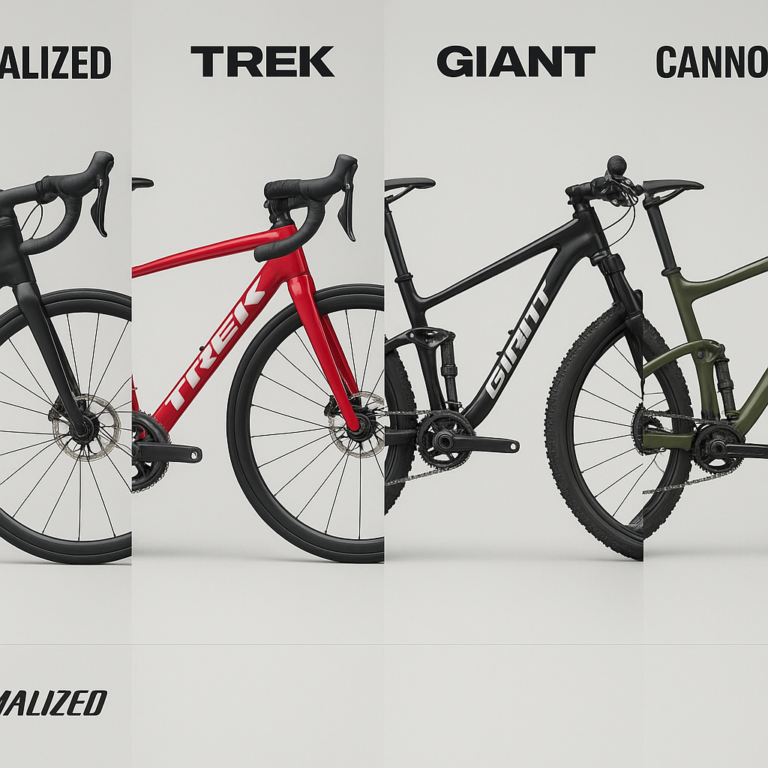
- Trek vs. Specialized: Specialized is known for their Body Geometry fit and S-Works line. Trek counters with Project One customization and OCLV carbon. Both are top-tier, but Trek often offers a wider range of entry-level options.
- Trek vs. Giant: Giant is the world’s largest bike manufacturer and makes frames for many other brands. They offer incredible value. Trek, however, has a more robust component ecosystem (thanks to Bontrager) and a stronger pro racing presence.
- Trek vs. Cannondale: Cannondale is famous for their Lefty fork and CAD aluminum frames. Trek’s Alpha Aluminum is comparable, but Trek’s carbon technology (OCLV) is often considered more refined for high-end racing.
The Verdict: If you want customization and a massive dealer network, go Trek. If you want value and innovative aluminum tech, look at Giant or Cannondale. If you want a brand with a strong focus on fit and a cult following, Specialized is your guy.
🛠️ Maintenance, Warranties, and Ownership: What You Need to Know About Your Trek
Owning a Trek is a long-term commitment. Here’s what you need to know to keep it running smooth.
The Warranty
Trek offers a lifetime warranty on the frame for the original owner. This covers defects in materials and workmanship.
- Note: The warranty does not cover normal wear and tear, crashes, or improper maintenance.
Maintenance Tips
- Regular Service: Get your bike tuned up at least once a year.
- Cleaning: Clean your bike regularly, especially if you ride in wet or muddy conditions.
- Tire Pressure: Check your tire pressure before every ride.
- Bontrager Parts: Since Trek owns Bontrager, you can easily find replacement parts like wheels, tires, and components.
The Recall of 195
In 195, Trek recalled nearly one million bicycles due to a faulty quick-release lever on the front wheel hub. It was a massive logistical challenge, but Trek handled it responsibly, reinforcing their commitment to safety.
🎨 Customization and Accessories: Personalizing Your Ride with Trek’s Ecosystem
One of Trek’s biggest strengths is their ecosystem.
Project One
Launched in 201, Project One allows you to customize your bike’s paint, components, and fit. You can choose from thousands of colors and combinations.
- How it works: You design your bike online, and it’s built to order in the US.
- The Cost: It’s more expensive than a standard model, but you get a truly unique bike.
Bontrager Accessories
With Bontrager, you have access to a vast range of accessories:
- Lights: The Flare series features daytime running lights for safety.
- Helmets: The WaveCel technology (introduced in 2019) uses a collapsible cellular liner to reduce concussion risk.
- Wheels: Bontrager wheels are known for their durability and performance.
The Ride Club App
The Ride Club app (launched in 2025) connects you with local events, maintenance tips, and other riders. It’s a great way to stay engaged with the Trek community.
📜 The Future of Trek: Upcoming Innovations and Sustainability Goals
What’s next for the red barn?
Sustainability
Trek is committed to reducing its carbon footprint. By 2025, they achieved a 50% reduction in aluminum production emissions. They are also exploring new materials and manufacturing processes to further reduce waste.
Diversity and Inclusion
Trek is investing in programs like the Pathfinders Scholarship to support young riders of color. They are also working to make cycling more accessible to everyone.
The Next 50 Years
As they look toward their centennial in 2076, Trek is focused on advocacy, sustainability, and youth engagement. They want to ensure that the next generation has the same love for cycling that they do.
Final Thought: From a red barn to a global empire, Trek’s journey is a testament to the power of innovation, community, and a little bit of rocket science. Whether you’re a pro racer or a weekend warrior, there’s a Trek out there for you.
🏁 Conclusion

So, there you have it. The story of Trek Bicycle Corporation is one of ambition, innovation, and resilience. From those humble beginnings in a red barn in Waterloo, Wisconsin, to becoming a global giant that sponsors Tour de France winners and builds bikes for the world’s most rugged terrains, Trek has left an indelible mark on the cycling industry.
The Positives:
- Unmatched Technology: OCLV Carbon and Alpha Aluminum are industry benchmarks.
- Diverse Lineup: Whether you ride road, gravel, mountain, or city, there’s a Trek for you.
- Strong Community: From Project One to World Bicycle Relief, Trek is deeply invested in the cycling community.
- Lifetime Warranty: Peace of mind for the original owner.
The Negatives:
- Price: High-end models can be expensive, especially with Project One customization.
- Controversies: The Lance Armstrong era and the Chris Farley lawsuit are part of their history.
- Complexity: With so many models and technologies, it can be overwhelming for beginners.
Our Recommendation:
If you’re looking for a bike that combines performance, durability, and a vast support network, Trek is an excellent choice. Whether you’re eyeing the Madone for your next race, the Fuel EX for your weekend trails, or the Verve+ for your daily commute, you’re getting a bike that’s been battle-tested by the best in the world.
Did we answer your question about whether Trek is worth the hype? Absolutely. But remember, the best bike is the one that fits you. Visit a local dealer, take a test ride, and let the red barn’s legacy ride with you.
🔗 Recommended Links
- Shop Trek Bikes – Explore the full range of Trek bicycles.
- Bontrager Accessories – Find the perfect gear for your ride.
- Project One Customization – Design your dream bike.
- Trek Travel – Plan your next cycling adventure.
- World Bicycle Relief – Support the Buffalo Bicycle initiative.
- The History of Cycling: A Visual Guide – A great book for cycling enthusiasts.
📚 Reference Links
- Trek Bicycle Corporation – Wikipedia – Comprehensive history and facts.
- 50 Years of Trek | A timeline of innovation and impact – Trek Bikes – Official timeline from Trek.
- Inside Trek – Heritage Global – Trek’s official heritage page.
- Popular Mechanics – Trek Y-Bike Award – Article on the Y-bike design award.
- League of American Bicyclists – Advocacy partner of Trek.
- World Bicycle Relief – Partner in creating the Buffalo Bicycle.
FAQ

When was Trek Bicycle Corporation founded?
Trek Bicycle Corporation was founded in December 1975 by Dick Burke and Bevil Hogg. It was incorporated in 1976 and began production in a red barn in Waterloo, Wisconsin.
How did Trek grow from a small shop to a global brand?
Trek grew through a combination of innovation (like OCLV carbon), strategic acquisitions (Gary Fisher, Bontrager, Klein), and pro racing sponsorship (US Postal Service team). They also invested heavily in retail expansion and community building.
Read more about “🚵 ♂️ Top 25 Mountain Bike Manufacturers Ranked for 2026”
What are the major milestones in Trek’s history?
- 1976: Founding in a red barn.
- 1983: Launch of the first mountain bike (850).
- 192: Introduction of OCLV Carbon.
- 193: Acquisition of Gary Fisher.
- 196: Olympic gold medal on a Trek bike.
- 201: Launch of the first mass-produced 29er.
- 2014: Acquisition of Electra.
- 2025: Launch of low-emission aluminum and the Ride Club app.
Did Trek invent the modern mountain bike frame?
No, Trek did not invent the modern mountain bike frame. The mountain bike was developed in the 1970s by riders like Gary Fisher and Joe Breeze. However, Trek played a crucial role in popularizing and refining the mountain bike, especially with the introduction of the 850 in 1983 and the 29er in 201.
Read more about “🏆 2026 Road Bike Brand Ranking: The Ultimate Guide to the Top 10”
What is OCLV Carbon?
OCLV stands for Optimum Compaction, Low Void. It is a proprietary manufacturing process developed by Trek that uses heat and pressure to remove air pockets from carbon fiber frames, resulting in a lighter, stiffer, and more durable bike.
Does Trek offer a lifetime warranty?
Yes, Trek offers a lifetime warranty on the frame for the original owner. This covers defects in materials and workmanship but does not cover normal wear and tear or damage from crashes.
Read more about “🏆 Top 15 Most Popular Mountain Bike Companies (2026)”
What is Project One?
Project One is Trek’s custom bike program that allows riders to choose from thousands of colors, components, and fit options to create a truly unique bike. It’s available for many of Trek’s high-end models.
Read more about “Are Schwinn Bicycles Valuable? The Shocking Truth (2026) 🚲💰”
How does Trek contribute to sustainability?
Trek has committed to reducing its carbon footprint through initiatives like low-emission aluminum production, recycling programs, and sustainable manufacturing practices. They also partner with organizations like World Bicycle Relief to promote cycling access globally.
What is the difference between Trek and Bontrager?
Trek is the bicycle brand, while Bontrager is a component and accessory brand owned by Trek. Bontrager produces wheels, tires, lights, helmets, and other gear that are often sold alongside Trek bikes.
Are Trek bikes good for beginners?
Yes, Trek offers a wide range of bikes suitable for beginners, including the Marlin (mountain), Verve (city), and FX (hybrid) series. These bikes are designed to be durable, comfortable, and easy to ride.
Read more about “🚵 ♂️ Is Trek a Good Bike Brand for Beginners? (2026 Verdict)”